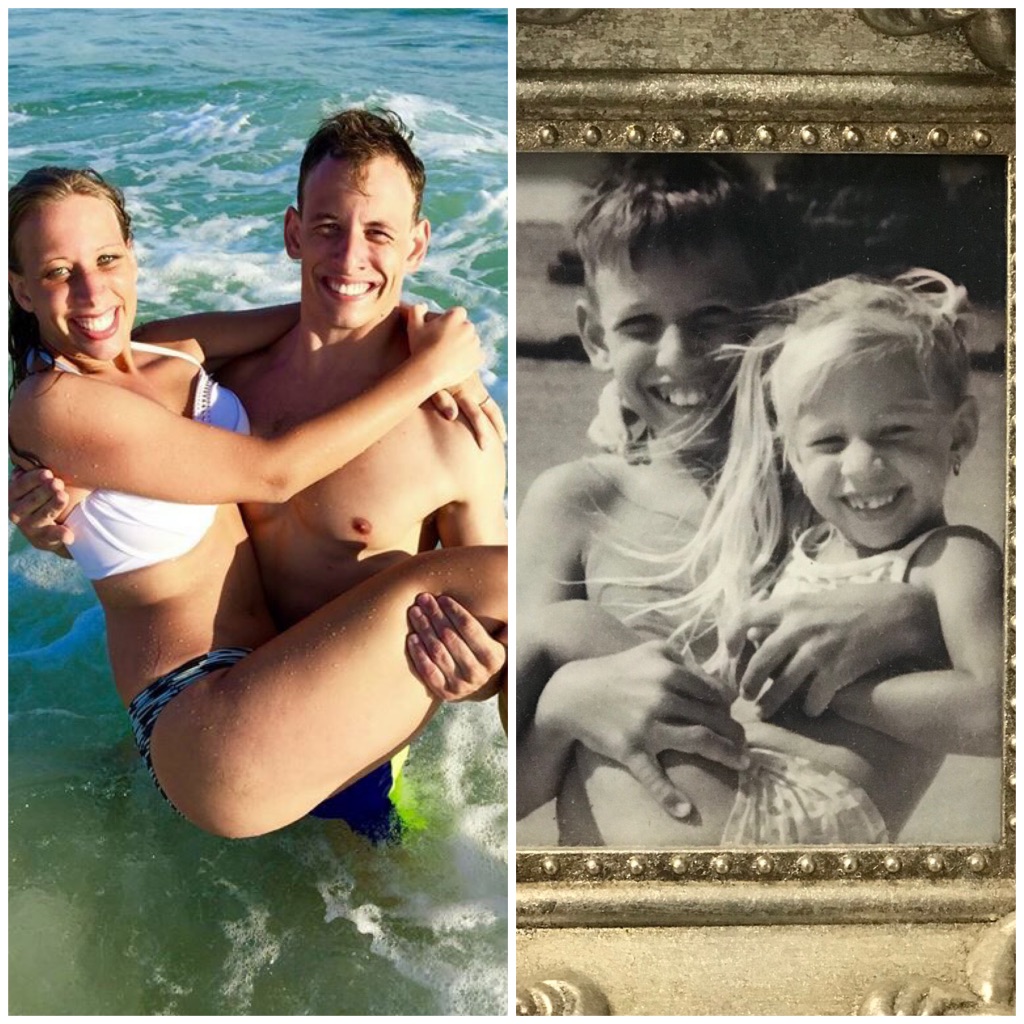
Pain’s Assault

Just when I think I’m going to be okay, the Pain materializes, reeling me backwards.  He grips me by the waist and drags me back, viciously ripping through the cavern between my lungs.   I attempt to remain calm, strong, and steady, but the horror engulfs my helpless body, robbing my mind of the ability to fight;  so I let Pain do what he must until I’m numb and lifeless.  Sometimes there are tears, more often it’s a silent defeat.  The ambush renders me vulnerable and knocked down: my fears and my weakness keep me pinned to the floor.  He hijacks me of all breath, and I halt:  If I process enough now, maybe he won’t attack me for a little while longerIf I stay here long enough, maybe I’ll learn how to get up again.  With new crevices carved into the cavern between my lungs, I’m weak, I’m alone, and it it’s dark.  Oh so very dark.

I’m weary.  My eyes year to rest and the gloom tempts me to surrender.  Alone, this Pain attacked me.  Pain contends to conquer as tears swallow my widening pupils, and, for a moment, he does win.

He comes haphazardly, begging for me to release him—Pain reminds me to feel.  He reminds me to heal.  He reminds me to rest.  He humiliates me.

When I’m hapless in his grasp and I think that all is lost, Pain flees.  My pupils dilate to a soothing light—the Father.  As suddenly as Pain assaulted, Christ enters, picking me up and tenderly drawing me into him.  He pierces through my shame, in my sorrow, and amidst my pain and becomes my strength.  While I am oh so weak, he carries my burden in exchange for his own.  He liberates me from my despair, calming all my fears, and restores me in his presence and with his community.  He reminds me of his faithfulness amidst a world prone to abandonment.

While I lie bruised and bleeding, he cleanses me of the wounds and addresses each trauma as it arises, assault after assault, revealing the the stripes he paid for my ransom.

I crumble before him, grateful, humble, and in awe of this loving Father.  He dresses my wounds and sends me back to my safe community—his church, his nurses—who see my lacerations and come along my side to help me heal.

No, they weren’t assaulted by Pain this time, but their pasts preserve the stories of their own scars.  This time, they’re stronger and they’re waiting to help change my wounds.  They don’t have my PTSD, they don’t live with my the memories, and they don’t know my horrors, but they see the manifestations of my fresh injuies.

With God guiding us all, they come along my side and teach me how to walk again.  I’m nimble and uncoordinated, requiring tenderness and patience.  I’m more sensitive than before.  I’m afraid, but I don’t want to be paralyzed forever, so I continue learning to walk by pressing into God and into his church.

I’m a survivor.  I survived the initial assault.  I live in the aftershock.  The horror has ceased, but its affects linger on.

— — —

I am healing—slowly, messily, gracefully, and dutifully—healing.

The days fluctuate: some are easier than others, some I cannot seem to concentrate and conceal the tears.  Others follow the pattern detailed above; sometimes the emotions surprise me and I feel like I should be “over it” by now, holding myself to a nearly impossible standard that, in turn, prompts me to feel failure, inadequacy, and guilt.  Grief is love that has lost its object of affection, and one cannot simply terminate one’s love, even if that love has been stripped from him or her.

So, I take “one step forward, and five steps behind,” and my healing progresses.

In the first three months after Patrick died, absolutely nothing made sense anymore.  All of my hopes and dreams and understandings collapsed within those months, and I was terribly afraid to live and to breathe and to know and to be known by others.  I was angry with God and angry with myself.  Disillusioned and then disappointed, I thwarted any intrusive thoughts of hope and of goodness.  Life couldn’t be good, I thought.  But, realistically, I was [am?] afraid to hope that life could be good again.  My hopes had been so violently stolen from me that I dreaded the thought of hoping again.  How can one continue to hope when someone else continuously takes everything she’s hoped for?  No, I won’t reduce myself to hoping again, I bitterly resolved.

Hope is a terrifying thing.  While alive, she helps us receive joy and cherish moments of mundanity, but if she perishes, we’re left behind with the trauma and disappointment of “hope deferred” (Proverbs 13:12).

 Nothing made sense anymore, and I did not want to make sense of anything my family and I were left behind with.  I harbored so much pain that I became too terrified to face it alone.  Most people I live near hardly knew Patrick—I cannot emphasize how isolated that can make one feel—and yet those nearest to me continue to graciously love, support, and encourage me despite my inability to pour myself out at this time.  God’s kindness and mercy broke through my “shelter” of self-preservation and He’s teaching me how to breathe in this new rhythm of life.

Perhaps we search for depth in others because it helps us process the depth of ourselves; we need one another and speaking helps more than I can explain.  At first, I was so afraid to voice my pain.  I was afraid that those around me would not be able to “handle” the truth of where my heart resides and would invalidate my feelings and my questionings, but, nonetheless, those in my life persisted to investigate my heart despite my protests.  God has opened my eyes and continuously opens them to see his mercy, and my dear friends continuously pursue me to show me how much they care about me. 

In this season, I don’t have much to give.  I’m overflowing with questions and slowly coming to a new understanding of life itself.  I am inquisitive and I am learning. 

I have to remind myself that the worst has already passed, and now I can enjoy a season of disciplined healing: one cannot heal if he or she lacks the willingness to do so.  Every day is new, every moment is precious. I see and feel new growth and new life all around me as I rest in God and I pursue healing in the shelter of his love.  God has been so kind to remove my fears and to reveal new truths to me. 

I am hurting, and this will always hurt, but I am happy and I am abiding in peace. 

Death & Escape are Not Freedom

I now empathize with the notorious Edna Pontelier when she filled her pockets with rocks, walked into the sea, and submitted her life to its waves: experiencing my best friend’s death, losing my great-grandmother, reminiscing of past losses, and struggling each day to know whether or not my brother has made it through the night. The past 365 days have taught me that the waves flow calmer than they appear, that life berates me more than it seems, and that escapism plagues a nation of plummeting addicts.

The waves tranquilize when you’re beneath them; they rage when you’re surfacing and tumbling through them, but they gently rock you when you dive below them.  It’s a gentle sway, almost like a cradle.  Perhaps that’s why we enjoy the water.  Its beats return us to the calming rhythms of childhood: before the loss, before the heartache, before the destitution. 

In literature, the ocean symbolizes innocence, danger, sexuality, and complexity—numerous in its expressive nature.  Innocence in that its tranquility brings peace.  Dangerous in that its murky waves captivate.  Sexually in a matter of mystery and addiction: complexity in its many forms.

We see it in our own lives—the ocean that took my beloved friend’s breath away is the same ocean that I cling to when my own thoughts become tumultuous.  It surmises me.  How can I look upon the waves that robbed me with such joy and solitude?  How can I trust them not to carry me down as well?

It’s the resiliency of the human spirit, gifted through God’s mercy.  He allows us to endure and strengthens us to persist despite the weight of the world looming at our shoulders and under our feet.  

I’m so weary, I’d love to submit to the waves.  To give up the fight is to be truly free, isn’t it?  That’s the lie Edna Pontelier, a pioneering feminist icon, perpetuates in her iconic death.  

But death and escape aren’t freedom. Death finitely robs us of all possibility of freedom, and escape imprisons us from experiencing freedom; attractive as their appeals appear, its their lies that rush us to ultimate despair. Once we begin listening to the lie that to die is to escape and to be free, we begin to give up on the hope that things can change.

Things do change, everyday, and that is why we must remember it is truth that sets us free, not death.  Christ said, “and you will know the truth, and the truth will set you free,” to Jewish believers in John 8:35.

That is exactly why I started my blog—to share with others with little truths that God revealed to me.  I began my blog based on Ephesians 5:13-14: “But when anything is exposed to the light, it becomes visible, for anything that becomes visible is light.  Therefore it says, ‘Awake, O sleeper, / and arise from the dead, / and Christ will shine on you.’” 

Death and escape are not freedom.  Truth is freedom.  “Who the Son sets free is free indeed,” John 8:36.  This life is horrifically hard, but that was promised: “I have said these things to you, that in Me you may have peace.  In the world you will have tribulation,” John 16:33a.  Christ does not conclude on a sorrowful word; instead, He adds, “But take heart, because I have overcome the world,” reminding us of the steadfastness of truth and of God’s faithfulness.

To The Sufferer:

We do many things when we operate out of fear instead of love: we kick and we scream, we beg and we plead, we ache and we cry, and we break and we bleed, until we shatter into tiny pieces and crumble gently to the cold and unforgiving floor.

This is tragedy,” we internalize as we attempt to grasp our broken pieces scattered about us. We trace the ceiling with our eyes as the chill from the floor sends ice down our backs.

But how can we feel that which is no longer connected to us? In shambles, we attempt to hold ourselves together. In truth, we’ve already fallen quite apart entirely.

No, our dust cannot be pieced back together.

— — —

On of my favorite quotes looms in Lewis Carroll’s Alice’s Adventures in Wonderland, awaiting an eager reader’s interpretation.

“I could tell you my adventures–beginning from this morning,” said Alice a little timidly: “But it’s no use going back to yesterday, because I was a different person then”

Too often “yesterday” prompts me to silently fear the plights of tomorrow and disregard the joys of today. It’s astounding how much a single day can alter one’s perception for the remainder of his or her life.

May 11, 2019: 3 Days before Patrick’s Funeral

Broken is a scary place to be–it’s vulnerable and alone, exposing and frightening–but, perhaps it’s the safest place to be. In David Platt’s Radical, Platt ponders: “What if the center of God’s will is in reality the most unsafe place for us to be?” Platt proposes that following God often leads us into perilous and/or painful circumstances that strengthen our faith and build the kingdom of God beyond the pain that we can see.

In Faith in the Fog, Jeff Lucas’s exploration of the interaction between Christ and Peter when Christ inquires, “Simon, son of John, do you love me more than these?” Lucas describes the dangerous draw to complacent avoidance:

Sometimes I’m lured by the thought of a safe, predictable, even dull existence. I don’t want a purpose-driven life. I don’t want purpose, and I certainly don’t want driven–I just want life.

Longing for consistency, we can foolishly allow fear to ransack our thoughts and carry us to places we know we shouldn’t go and prompt us to do things we regret–we’ll run from the goodness we fear into the clutches of a deceptive “safe place,” where we find comfort in the familiar. Unfortunately, familiarity does not equate to safety.

Tranquility is monotony’s gift. It’s the security one feels in the comfortability of a changeless season, but it can be precariously complacent. Succumbing to temptation to live a life dedicated to ease causes us to miss the opportunity to indulge with those who suffer and to build one another up from places of deep depravity and heartache.

Believe me, I crave “normal,” “easy,” and “safe,” now more than ever, but surrendering to “I don’t care” and embracing a simple life dedicated to fear steals any opportunity to glorify God with my gift of suffering.

Numbing one’s pain never helps–instead numbness creates a welcoming environment for sin to manifest through disbelief. When we choose to numb ourselves to the desires of God–desires for life and abundance and suffering–we reject the of goodness in His plan.

I don’t want to care anymore–life is easier when we don’t care about what’s happening around us, right?? That’s the illusion of denial. Denial deceives us into believing that all is well when the world is on fire, and, in the end, we burn along with the rest of the world because we weren’t discerning enough to escape the flames.

— — —

When I dreamed of the future, I never imagined that my brother would not be in it.

That day and the following two months changed [and continue to change] me more than I was willing to admit to myself and to others; I fear my emotional response to his death, I fear my past, and I fear healing from the events that mar me. Healing seems like letting go of someone who was supposed to be with me forever.

I’ve been reduced to dust, as Lysa TerKeurst defines these kinds of seasons in her book, It’s Not Supposed to Be This Way. Dust moments–they’re the moments that forever change your existence and shatter who you once were. I liked what my life was like back then. I liked how my family looked back then. I liked who I was back then. But, like Alice, I am not who I was yesterday, my circumstances today are not like they were, and I will never return to the woman that I was at that time.

-- -- --

Do I love God more than I love what I had hoped for Patrick?

I spent months in fear of that question–I spent months in fear of how his death will affect my perception of life itself. Months.

This time, I was broken beyond repair. My family was broken beyond repair. It feels like I died on that day, but I kept living. I kept breathing. I kept moving. But I was reduced to dust, and life mollified me.

I have so much to fear, but I also have so much to live.

I have changed. I’ve changed so much since May 7, 2019. My entire outlook on life and death is dramatically different than what it once was, and I am so incredibly thankful for that.

— — —

A friend loves at all times, and a brother is born for adversity.

Proverbs 17:17

My sweet friend, Jocelyn, came to visit me this past weekend. Jocelyn’s been an endearing blessing for my entire life–she’s safe, she’s welcoming, and she’s encouraging. She loves Jesus and she loves me and my family, and she came along my side and gladly stayed in the messy room I’ve neglected since May. She told me it’s okay, and she told me I was strong. She went on a crazy adventure with me and smiled and laughed the whole time.

Virginia Beach, August 2019

Jocelyn helped me get back on my feet–it’s truly amazing how life-giving a lifelong friend can be. It’s so sweet how Jesus uses those around us to build us up.

— — —

Yes, I have changed, and yes, I have broken entirely. I have been reduced to unrecognizable dust. God brings life from the dust, and He’s given me another chance at life. He rejuvenated my perspective and has lifted my spirit. I am not who I was, and I am okay with that. I am healing, I am being made new, and I am living.

— — —

When love compels us, any fear we have becomes worth the risk. Love emboldens and strengthens. Love is what picks us up from the floor:

For the love of Christ controls us, because we have concluded this: that one has died for all, therefore all have died; and he died for all, that those who live might no longer live for themselves but for him who for their sake died and was raised.

II Corinthians 5:14-15

It’s the warmth of a loving Father, welcoming his cold and tired prodigal home with open arms. Our refuge and our rock–our God and our redeemer. He takes the dust that we are and renews us entirely.

Okay?

April 21, 2019

“You never give up on me”, the amazement flowed from the tears in Patrick’s eyes.

But, I thought, the truth is that I gave up on you years ago.

Yet I’m still here.

Maybe I tricked myself into believing that I gave up on you. Maybe it’s because I was well acquainted with the pain you cause[d], but I’m thankful that you realized I hadn’t given up on you even when I thought I had.

No, I never gave up on you. I believed in every single breath you gave.

— — —

I spent the last two months two months pretending that the most horrific events of my past did not happen. I went on eight different trips and visited 13 different cities; it’s funny how you can trick your mind into believing false narratives simply because you long for something greater. I want to believe that earnestness exists, that redemption persists, and that goodness triumphs.

But I don’t.

Or, at least, I didn’t.

Eight trips filled with laughter and memories, yet the plane rides or car drives confronted me with the realities I so desperately wished to ignore. On the plane and in the car–that’s where I fell apart.

You can only smile for so long before tears force their way out, leaving you exposed to an onlooking world. And on airplanes?? Lord bless those sitting next to me… they didn’t ask for this mess. Though, neither did I.

Thoughts on my final plane ride brutally scorned me: “If I love God, how could I _____?” “If you love someone, why do you purposefully act malignant?” “If I had done _____ would he still be here?”

One’s mind and heart quickly betray him in times of immense tragedy, rendering him confused and pained. Mine convinced me to ignore reality again and again and again, until reality assaulted my mind into submission. You cannot outrun the truth, no matter how bleak it is.

— — —

It’s was Tuesday night, three months and one day since we found out about my Patrick’s demise.

I’m in church and it’s dark. Unable to hold anything back, I release emotions I do not deserve to have–no one should endure circumstances like this.

My roommate Lauren reaches over:

“I’m proud of you, Hope. You’re finally grieving.”

Aaaaand I’ve cried everyday since. Moments so full of anguish that I stop breathing and have to literally remind myself how to function. WELCOME TO GRIEF, HOPE. It’s about time…

— — —

April 24, 2019

“I feel like we are a team specifically you and me to beat this. It means alot,” Patrick texts me.

“That’s right we are. You are going to beat this. Absolutely.”

“Every time I see you, you say we got this and i actually believe it for once”

I believed it too, Patrick. I believed it too. I still cannot believe that you are gone.

— — —

When you lose someone you love, it is as though all light has departed. Reality dims. Hope fades. Confusion suffocates.

Recklessness ensues when you stop believing in redemption: Satan tempts you to believe that actions are meaningless. You grew weary in doing good works. Look where they got you? I questioned as the tears soaked my sweatshirt.

The truth is, there are some things we will never let go of; we must live through the emptiness and press on because of Christ’s mercy. Sometimes the most disheartening circumstances are the manifolds of God’s mercy. While it’s laborious to perceive, there is much glory in earth’s eternal despondency.

I tried to stop hoping. I attempted to “give up” on those that I love dearly as a coping mechanism, but I cannot.

Even after the tragedies I’ve witnessed first-hand–no matter how “safe” disassociation and pessimism may make me feel–I cannot stop believing in redemption.

I don’t recognize much “light” these days. Engulfed in darkness, wrestling through disappointment and heartache: nonetheless, I still believe in redemption.

I see hurting people all around me, the heartbroken who respond by attempting to break themselves and to break those around them, but somehow I still believe in redemption. Side note: Please, seek help and guidance when you need it, friends. No one is past redemption’s threshold–if he would only focus on what he knows to be true. Not all is lost.

In The Fellowship of the Rings, Tolkien exemplifies the relationship between hope and heartache: “The world is indeed full of peril, and in it there are many dark places; but still there is much that is fair, and though in all lands love is now mingled with grief, it grows perhaps the greater.”

I cannot see the goodness in this situation, and I feel far more broken than I can express, but I trust and I hope in what I know is True.