Week 46

We grievers sometimes have ethereal imaginations — dreaming of the heavens, trying to picture what it may be like where our loved ones lie.

Seven years: 2,558 days exactly since police discovered my brother’s body.

When Patrick died, did he soon learn that our mother would follow his example? Were her mind’s secrets revealed to him years before she definitively decided to leave?

* * * *

It was May 4, 2019 and I had just left a large gathering that honored and remembered my dear friend, Walter, on the one year anniversary of his passing.

I spent that night at Patrick’s house, he had invited me over for the weekend. He was drunk when I got there, and he was horribly ashamed about it too. I was sad to see him like that. I was sad for so many reasons that night. Missing my friend, hurting for my brother, and attempting to nurture what life I could.

Patrick wanted to watch “Ready Player One,” so I watched it and he passed out next to me. I couldn’t move him into a bed, I wasn’t strong enough. So I covered him with a blanket instead and hoped that I got him into a comfortable enough position.

He woke before I did — I’d had a hard time falling asleep — and made me blueberry pancakes. He gave me a book to take home, but I still haven’t brought myself to read it. It was a Sunday. We hugged goodbye and that was the last time I saw him. He wanted me to drive him to a rehab facility on Monday morning, but no one heard from him again after that evening.

I was shocked to learn that he died by suicide. I thought that drugs and alcohol would kill him, and perhaps they did, in some way. We know they altered the brain.

Maybe Momma was so afraid of alcohol because she wanted to drink her life away, too. Maybe she saw in Patrick what she really wanted to do. But I don’t blame him. Perhaps his death influenced hers… Probably, but she made her choice, even knowing how what he did destroyed pieces of each of us.

* * * *

I wonder if Patrick knew how much it hurt when he left us. I wonder if he saw that after he died, or did it even matter? Did he forget us? Does he ever see me an eternity? Can he feel my love and loss and sorrow from the grave?

What was it like when Patrick and Momma reunited? Did they both cry? Was it happy and sad? Did they catch up?

Did they talk about us? Did Patrick tell her how he watched her mourn? Did he apologize? Did he hold her? Oh, how sweet it must’ve been. How sad it must’ve been.

* * * *

I wish Patrick had gotten better. I wish he had made it to Melbourne with me, like we talked about. Does he remember that conversation? Patrick looked up the city after I told him about it. He told me about the airport and how he could work there too. He just wanted to be with me, in Virginia where we lived or in Melbourne where I hoped to move… I see that now. I don’t know if I understood that then.

I really loved him. I’m sad that my love matured to grief so soon.

* * * *

Maybe Patrick wasn’t a good man. It’s hard to tell with his life, he hurt people deeply: he became a drunk and struggled with pills. Who are we to judge? He had a good heart. He wanted to be a good man. He really tried, but oh how tormented he was.

Patrick was in so much pain from such a young age, and what was he supposed to do with that pain? He couldn’t express it at home — Mom wouldn’t allow that — but it had to leak out.

Pain demands attention. Sometimes, Pain demands an audience, but pain only wanted Patrick’s attention and his tenderness. Mom taught us that it was bad to give pain and sorrow our attention. Patrick didn’t know what to do, so he went about it all the wrong way: he tried to medicate, but that doesn’t work. Not really.

His medicine had left side effects, devastating effects. It contorted and isolated him, and we didn’t know what to do. I’m sorry for that.

So, maybe Patrick wasn’t a good man. But he had a good heart. It was just too wounded to do much healing. It was just too fractured to be fused.

I believe that he could’ve healed, though. It was his own delusions that wouldn’t let him see it, and that’s the hardest part. Who knew that the devil could be inside you? That the accuser could be within your mind?

* * * *

I don’t often share what it’s like to live with someone with mental illness. As children, we can be caught up in our parents delusions. As siblings, we can be caught in the middle of our siblings’ chaos.

My mom held the belief that we could not be sad. She rejected it, she masked it, she avoided it. She taught us that this was normal, and that feeling sadness was wrong. That was probably the most dangerous thing she taught us, and the one of the most deadly thing she believed herself.

Sometimes we can turn the people who died into saints, but it’s just not true. Duality exist in all of us. With that duality, we can bring life and love and joy and care, and with that duality we can destroy.

* * * *

Patrick was a complicated man. I loved him wholly despite of the many pains he brought about. Patrick was tender and nurturing and kind and loving. He was easy to talk to and he had a wonderful laugh. Patrick would get so excited about little things — he would become fixated on a hobby and it would quickly become his lifestyle.

As loving as he was, Patrick was mean too. He was so filled with hurt that he often hurt others. He was charming and wonderful and loving. He was an amazing brother in many, many ways. He loved his family deeply, so, so deeply. Patrick was a turbulent man. He was a complicated man. I loved every piece of him.

My Mom was complicated too. I’m learning to identify some of the harmful things she taught us and did to us, and it’s really not a fun process.

* * * *

This week, I remember my friend Walter: Deceased – May 4, 2018.

I remember my brother Patrick: Last contact – May 5, 2019. Discovered lifeless – May 7, 2019.

I remember my Momma: Mother’s Day – May 10, 2026.

It didn’t matter how much I loved any of them. They are all still gone.

* * * *

I hate this week.
Week 45

Oh, the things we do in the name of love

Oh, the misguided things we do in the name of love.

Oh, the wicked things we do in the name of love.

* * * *

Welcome to death week, my friends.

May contains too many Death Holidays to list, too many pain points to discuss. I draw small blue hearts in my calendar on each Death Holiday/anniversary/marker to delineate the importance of the day: five blue hearts for May.

One of my siblings has a birthday this month — a glimmer of hope amidst a month marked with endings. It will be his first birthday without his Momma though, and that will be difficult. I marked my birthday with a blue heart this past year. Because, like I inscribed last week, every milestone regardless of how happy is shaded by what isn’t. It’s as if every moment is captured in a black-and-white photograph: you can see the smiles, you can see the joy, but the dissonance chills the ambiance.

* * * *

This week I’ve been struck by the cruelty of imperfect love.

Some say people die by suicide in an attempt to unburden their loved ones, others say anger drives people to violence, and many say shame or depression or overwhelm or a mirad of other things… all things we can’t validate because the only people who know are dead.

Rita Schulte pens it well in her book Surviving Suicide Loss, educating “Suicide doesn’t end the pain. It only lays it on the broken shoulders of survivors.” So, we survivors carry it and oftentimes feel more dead than alive. We feel hallow rather than of substance, opaque rather than solid.

People who knew my mom feel a special connection to us because we were a part of her, even if they did not know us well before she ended her life.

Some people honor that connection with kindness, empathy, and love. These are a balm to our shattered heart and aid in our healing.

Others treat us with contempt and cruelty — I’m not writing about people who couldn’t show up [that is okay], I’m writing about the people and organization who intentionally inflicted wounds. It happens to all suicide survivors in some form. Books tell us to expect it.

But one thought haunts me in the wake of their cruelty…

If you could be so cruel to me and my family, what did you do to my mother?

What did they do to her?

Week 44

I miss when life was effortlessly happy. I miss when it was easy to go out with my husband and simply enjoy the moment or the meal or the adventure.

Now, memories and grief cloud every moment. Dinners are particularly difficult and I’m not exactly sure why, but I suspect it has something to do with the thousands of dinners I enjoyed with my family. There used to be six of us: four rowdy kids and a Mom and Dad. It was fast — with three growing boys, especially, dinner seemed to go so quick. I love having dinner with my sweet husband, but it’s a stark contrast to what was once was my home.

We go to places we used to take my parents, and I can’t help but think of the smiles and laughter the four of us once shared. Many were places Scott and I first discovered together, then brought my parents to escapade with us.

Presence, they say, is the key to happiness. I wholly believe that — romanticizing the past and dreaming of the future tends to destroy any chance at present happiness, but there is also a time to grieve.

Grief is a whole body experience — its brain damage, as its simplest explanation, and it affects everything. The more traumatic the death and the closer connection, the more damage is inflicted.

Brain damage takes time: slow, lethargic, low-stimulus, and quiet to heal. In our western world, grievers are not often privileged to this… we have to go to work, we have to keep up with responsibilities, we have to continue with normal living. For the majority of our days, we have to pretend it’s okay. And to an extent, it is okay. To an extent, it is happy. Because, once again, it’s a both-and.

It’s a dichotomy of emotions.

But I miss when it was just one — just happiness, just tiredness, just excitement. I miss that simplicity.

I miss just celebrating and really celebrating, not thinking of those who can’t celebrate with me.

Even at our wedding, I remember crying with my Mom about how Patrick couldn’t be there. We didn’t have to say it aloud — one look and it was easy to tell we were both heartbroken about it.

And then she left me, too.

That fact will be painful everyday and even more poignant at every milestone for the rest of my life. And that just sucks.

* * * *

So we celebrate, and I cry. I try not to… not to suppress the grief, but to experience the today.

I don’t want to be happy and sad [simultaneously], I just want to be happy, but I don’t think that can ever happen again.

Week 43

+ This may triggering for people who have lost their spouse / partner *

And so Spring begins, creeping in with the rising sun. Our days stretch longer, our nights illuminate later, our souls dance to new rhythms.

Spring has been so unkind to me… it ushers in many death dates: my friend, my brother, Mother’s Day, mom’s birthday, mom’s death day. Last year there were only three significant dates — I say only, as if three dates isn’t a lot already — May 4, the day I lost a friend. May 5, the last time I saw and heard from my brother. May 7, the day police discovered his body.

I call it “Death Week,” that first embittered week of May. I call them “Death Holidays” now… I can’t quite think of a better term.

* * * *

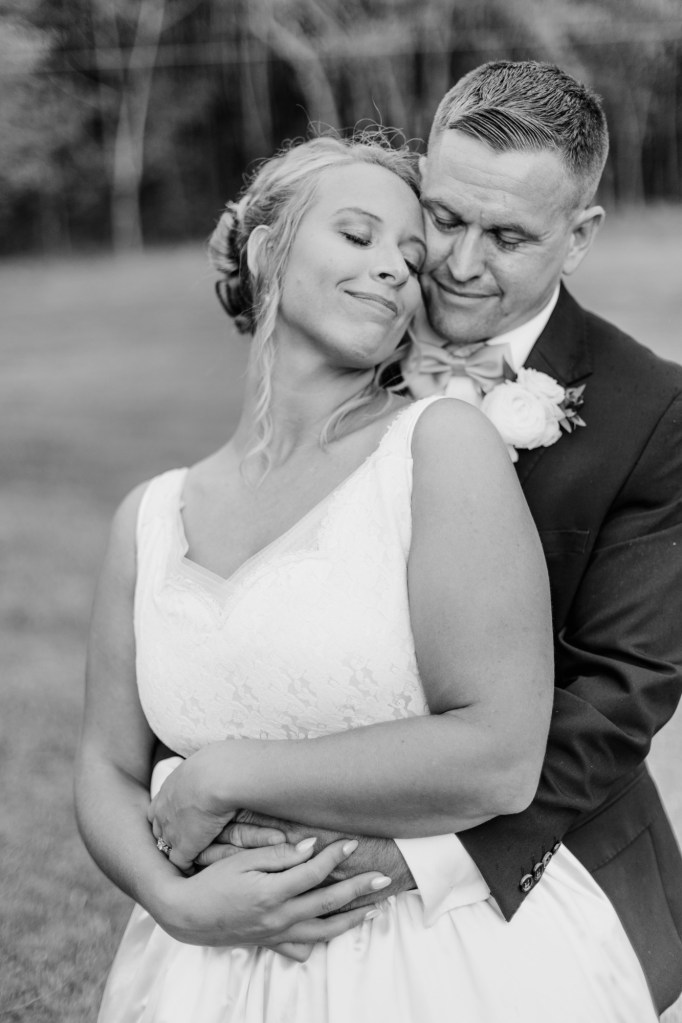
In 2022, Scott and I chose to get married in the early Spring. We wanted to bring something happy into our Spring. Despite everything, Spring remains one of my favorite seasons: it’s the season the world comes back to life. But for us, it’s a season of so much death.

April 22nd marks our three year wedding anniversary, yet these three years have felt like a decade in some ways.

Despite our best efforts, our one wedding date only glimmers compared to the black holes of our five death dates. It feels like such a speck of light this year amidst a galaxy of darkness.

Years ago, perhaps even more than a decade ago, I remember sitting with my friend Gabi and discussing how it’s important to choose someone with whom to suffer well.

Suffering brought Scott and I together, but we didn’t really find each other [romantically] until years later. We began dating in a beautiful season of bliss with neither one of us actively enduring tragedy. We both had grown, and we often talked about how nice it was to get to know each other when life wasn’t falling apart.

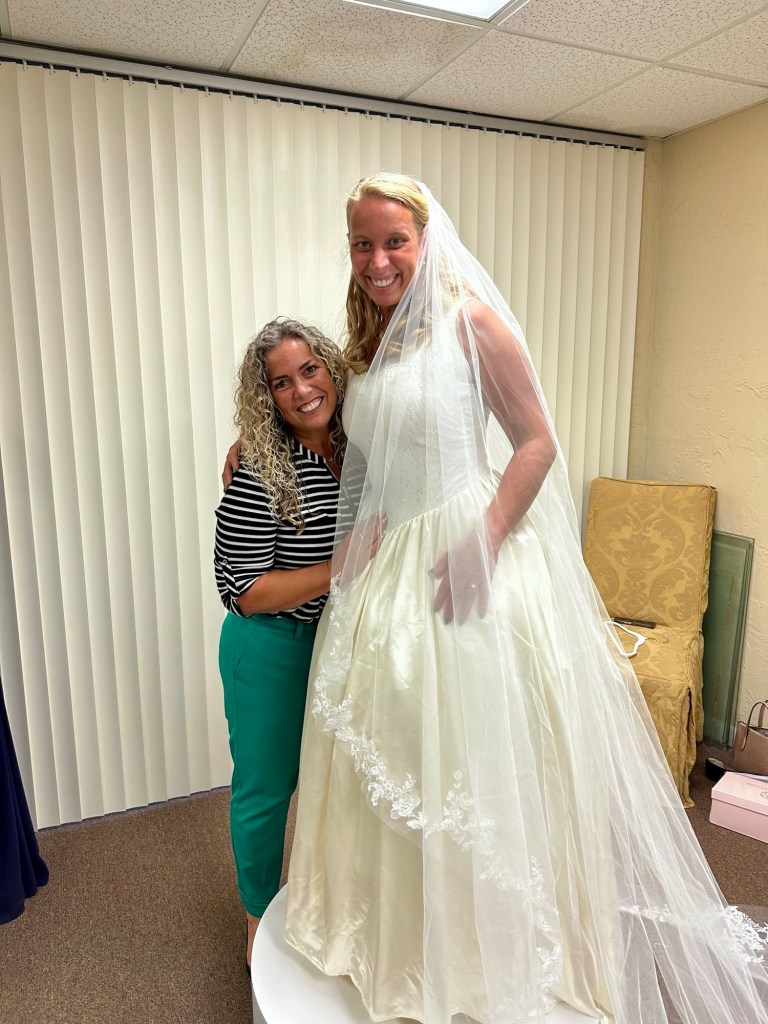
I wish I would have enjoyed our engagement more. Truthfully, I didn’t want a wedding and the planning stressed me out. Scott was figuring out a way to move to Florida and we were trying to buy a house together, too… it was a lot.

In hindsight, I wish I would have simply enjoyed planning things with my Mom.

But we just don’t get time back, do we? *sigh*

* * * *

Scott and I have been through so much together, and lately I’ve been grateful that I did choose someone to suffer well with, because we’ve suffered more than we could have imagined.

For years, I did not want to get married. I was afraid of how allowing someone into my life and into my safe space would disrupt my peace and ultimately harm me. I was happy being single… it was safe and calm. I could not imagine someone actually helping me navigate pain.

I idealized my parents’ marriage, and in many ways I still do. I didn’t think it was possible to find a love like theirs. They adored one another, they loved to be together, they helped each other, and they put their relationship first… until one day, she didn’t.

To have two family members’ lives so abruptly destroyed severs attachment beyond communicability.

Initially, I feared that Scott and I would fall apart. To lose my Mom, to lose my parents’ relationship shakes everything.

But we haven’t fallen apart, we’re learning to face death and suicide again. We’ve learned to suffer well, if anyone really can suffer well.

* * * *

Our anniversary is a blessing, and in some ways feels like a miracle. It’s a date of happiness amidst dates of death and sorrow. It’s a date of love still living, of life still blooming, of grace still emanating.

Ultimately, I am hyper aware that we won’t be in this together forever. I hope and pray we live natural lives and die natural deaths, supporting one another til one of us does die. That would be ideal.

Nonetheless, I’m grateful for the todays. I’m grateful for our life together, our home together, our rhythms together. I’m grateful for our love, our peace, and our laughter. I’m grateful for our quiet moments, I’m grateful for our adventures. I’m grateful that we have each other at the end of each day, and I’m grateful for how much we enjoy one another’s company.

I’m sorry our first few years of marriage carry so much heartache. I’m grateful for the comfort we have in each other. I’m grateful for the peace and calm that Scott has protected in our lives. I’m grateful that we suffer together, supporting one another. I am grateful for every today that we get.

I hope our years won’t always be this painful. Thank you, Scott, for bringing comfort and kindness to my life each day. I love you 🩵

Week 42

It’s been 295 days since my mother ended her life. I don’t exactly remember when I stopped counting the days, but I believe it was around day 100.

I remember those first few months, thinking I’d never sleep again. Vivid nightmares, fitful evenings, restless days. I think back to that time period as the “zombie days.” These 295 days have felt like a decade and likewise feel like a liminal gap — as if none of this is real.

I sleep now, most nights. At least once a week I’ll wake in the middle of the night and will be unable to coax myself back into sleep. Nightmares subsided for the most part, too.

But if I’m honest, every moment is just as miserable. And it’s not… and it is. The breadth of experience is so uncannily vast that one can feel happy, miserable, stricken, and calm simultaneously.

It’s exhausting. It’s tragic. It’s heavy. It’s not all miserable… but, also, it is all miserable.

A Stolen Life

Oh how beautiful this life would be
if only you chose to stay with me.

Instead, in solemn sorrow you lost your mind
and chose to leave this weary world behind.

Violence overtook your meekest soul
and love was lost with this beautiful life you stole
.

Tips for Communicating with a Person in Mourning

  • Be gracious. Do not be surprised if someone deep in mourning gets a little snippy with you, is irritable, is not very talkative, or tends to dominate the conversation. It’s not you, it’s that mourners have a lot got going on. If you are in mourning, be gracious with yourself and with your family. I’m sorry if those around you haven’t experienced much grief — it’s incredibly hard to fathom a grieving mind if you haven’t experienced a deep personal loss.
  • “I’m sorry” feels like such a weak thing to say, but it encompasses a tremendous amount of emotion and care. The short phrase empathizes with the survivor and often creates an understanding between two hurting people.
  • Acknowledging the situation is better than avoiding the topic altogether. It may be awkward to speak up, but a simple “I see you,” goes a long way.
  • The less decisions a person in mourning needs to make, the better. Mourning requires an enormous amount of mental energy, and helping make a decision alleviates a bit of mental fatigue.  Don’t be surprised if a griever locks up / shuts down if you ask them what you perceive to be a simple question. Nothing is simple in grief. Nothing. 
  • Presence is best. Be, share, and create emotional safety.
  • It’s okay to ask “How are you doing?” It’s a simple phrase that shows you care, but monitor your tone while asking. There’s a significant difference between an excited “how are you!?” and an empathetic, “so, how are you doing?” Odds are, a mourner is not likely to match excited energy.
  • It’s not okay to ignore the situation. The unknown of grief can make one feel awkward and uncomfortable when he or she does not know what to say nor how to act, but a simple acknowledgment of “I’m sorry for your loss,” is preferable to pretending to act normal. Talk about the elephant in the room. It’s all that the griever thinks about. The mourner cannot act normal, he or she is in deep grief. Please do not put a mourner in a situation where he or she feels pressure to be normal.
  • It’s okay to ask if a survivor wants to talk about it — if one is close friends with a griever, the bereaved may crave the kindness of a listening friend. If one is more of a stranger to the mourner, the griever may be uncomfortable talking about the situation. No matter the reaction, it’s okay to ask. Better to ask than to ignore.
  • Declaring “Your [loved one] is always with you,” is not helpful. Perhaps it will be in the future, but in the first few days it’s more of a reminder of the chasm between the mourner’s life and his/her loved one’s death. This phrase is especially painful for a suicide survivor, who is left with an incredibly deep abandonment wound. 
  • Letters are a great form of communication. They are incredibly thoughtful and sweet. Unlike a text or phone, letters are calming — there is little pressure to respond and they are crafted with care. Sending a mourner a letter is a kind thing to do, and it means more to the survivor than you realize. Even if a griever does not reach out after receiving a letter — he or she likely forgot — that letter meant a lot. 
  • Calls are easier to answer than text and/or instant messages, but a mourner might not always want to talk and they will likely forget to call you back. Don’t feel bad if you call multiple times – calling shows that you care. Texts and instant messages are great too, but a bereaved individual may only have the capacity to answer a few 2-3 messages a day per day, so please be gracious with their delayed response.
  • If you have to start a sentence with “I’m sorry to ask you this,” or “I’m sorry to pry, but…” do us both a favor and don’t ask that question. That’s your conscious telling you that, yes, it is an inappropriate question to ask.
  • Simply reach out: via text, via instant messenger, commenting on posts. The survivor may not responded, but often appreciates them. Messages help. Survivors appreciate reading about your experience and it can feel validating and comforting to see friends’ support, prayers, and encouragement. A simple moto to remind yourself is that you may need to reach out to a survivor 3 times before the survivor realizes you reached out at all.
  • Podcast, sermons, videos, and songs are not necessarily helpful. A survivor does not have the energy or focus to listen to hours of lectures. This can quickly feel overwhelming.
  • Share your stories of the person who passed away. Survivors want to hear them.
  • Educate yourself. Don’t make a survivor educate you. It’s 2026 — there are multitudes of resources (even Chat GPT) to help you navigate how to support survivors.
  • Keep inviting, even if the mourner keeps turning down invitations. Celebrations are incredibly difficult for a mourner, though we are truly happy for others. Grieving makes one sensitive and easily overstimulated. If a mourner thinks an event will be triggering, he or she is likely not going to attend the occasion. Triggers mean tears or irritability, and a mourner will not want to take attention away from someone else’s event by letting their emotions surface. Mourners want to support their friends, but they have very little capacity to do so.
  • Remind the griever how much he or she means to you. Again, someone in mourning simply can’t show up for their friends in the same way they did before. This can make a griever feel incredibly isolated, feel like a bad friend, and anxious about their relationships. Mourners need a lot of reassurance and reminders that they are loved and are not a burden. We are hyper aware of how little we can give in relationships, and that scares us.
  • Be kind.
  • Understand that survivors are unfathomably exhausted. Honor that.

Future Ways to Help

  • Small tasks are incredibly helpful — doing a load of laundry, wiping down a counter, calling to set up a dental appointment. Sometimes it’s hard for me to even remember to put a pair of shoes on – it’s invaluable to notice those little things that may be neglected and to help one another out.
  • Listen. Create a safe space for the wounded. A survivor may want to share details such as how their loved one died, this is a privilege and not a right. This sacred information should be honored with respect and reverence.
  • Create a “GoFund Me” or something similar on behalf of the survivors
  • Lawn care
  • Meals: Meal trains are incredibly helpful, please do this for your grieving friends.
  • Gift cards, DoorDash, Uber Eats

Resources

  • Read Megan Divine’s It’s OK That You’re Not OK. It’s an excellent book that discusses the cultural dismissal of grief and loss. We live in a culture that has left behind the art of lamentation and grief, leaving mourners with even more confusion to their natural response to tragedy. Amazon link: https://a.co/d/bHe9yHY
  • Read chapter 17 of Mel Robbin’s Let Them theory. Amazon link: https://a.co/d/0eER0zBJ

Week 41

I don’t think it’s very miraculous that we can’t kill a God — I don’t think it’s miraculous that Jesus rose from the grave. It’s miraculous that we murdered the son of God and that he loves us anyway.

Jesus didn’t come to this earth to die — he came to embody love. He came to see the marginalized, to be with the hurting, to heal the broken… and humanity killed him for that.

Of course we can’t kill a god.

I think we’ve missed the point, focusing on his resurrection as if we really had the power to vanquish the creator of life.

The miracle isn’t that he died, the miracle is that he came and then he returned when mankind treated him atrociously. The miracle is that he knew he’d be treat maliciously and he still chose to love us. The miracle is his love and compassion and grace and dignity. The miracle isn’t that mankind couldn’t kill God, the miracle is that he came back.

We’ve missed the why.

Jesus came to offer us a glorious life where we live in community, care for the marginalized, and aid in one another’s healing and he came back even when it killed him. He came and he returned to love.

Love never ends.

You cannot kill it, you cannot deny it, you cannot avoid it, you cannot pretend it doesn’t exist. Love is eternal. It transcends space, time, memory, life, and even death.

We feel tortured and agonized and anguished in grief because sorrow is love’s winter: grief is the other side of love, because love is endless and unfathomable. Love does not end in death — that is why grief stays with us forever, because love is eternal.

Mankind cannot kill Jesus, not eternally, because Jesus is love, and love cannot be killed… just like how a god cannot be killed. Mankind absolutely murdered Jesus, but you can’t obliterate something eternal. It’s not possible, and, therefore the resurrection isn’t miraculous. The miracle is that he loves people despite the fact that we murdered him.

In the Christian world, the Easter season seems to glorify death. There’s nothing beautiful about murder. There’s nothing good about Good Friday — nothing at all. Jesus didn’t have to die to save us, Jesus died because he was murdered. As Peter declared, “You denied the Holy and Righteous One… You killed the source of life” and God raised him from the dead (Acts 3:14-15).

In his own words, Jesus said “I have come so that they may have life and have it in abundance” (John 10:10). He said this to his murderers and to the people who despised him. Our miracle isn’t his resurrection, it’s his love for us.

* * * *

I’ve grown to despise the Christian — perhaps the Western — glorification of death. I reject it, and it sickens me.

Yes, this is the first Easter without my Mom. She always called it “Resurrection Sunday.” She still made us Easter baskets, she even made Scott one too.

This time of year is terribly triggering for me. I spent Easter 2019 in the hospital with Patrick. I found him at a hotel, passed out and over dosed. I called 911 and they pumped his stomach. My roommate dropped me off at the hospital and I spent the night there with him as he came off of his high.

He was shocked I stayed the whole night, and I was saddened that he would be so shocked. I told him that he’s my brother, I loved him, and I would not leave him like that. He asked me if I really believed that God could set people free (John 8:36), and I sang to him Hillsong’s rendition of “Who You Say I Am.” I was 21, I felt 60 that night. I told my roommate a few days later I wasn’t sure how he could keep living like this. I pondered that the alcohol or hallucinogens would end him, but I never would have imagined that he would commit suicide less than 10 days later.

Spring ushers a multitude of mourning: Easter, my sweet friend Walter’s death, Patrick’s death, Mother’s Day, Mother’s birthday, Mother’s death.

I mourn the dead, and I mourn the living: I mourn my grandparents and my Mother’s church. Sometimes it feels like they killed me, too.

* * * *

Good Friday and Easter are about so much more than a deity’s life and death: it’s about a murder and a radical love that changed the world.

Stop glorifying death. It’s killing us.

Week 40

This sadness sits comfortably in my chest, cavernous in my heart. It’s poignant darkness and chill courses through my body and sometimes escapes from my eyes, but most of the time it stirs beneath the surface ever-present and ever demanding I acknowledge it and tend to it.

This sorrow upholds me, it caresses me and comforts me. Sorrow is love’s winter: we experience sorrow because we love. It’s love gone cold, love that’s missing its object of affection, love that persists after loss.

I’ve ponder the irony of 40 weeks since my brother said “Nine months, that’s how long it takes for a baby to be born” last week. Instead, no babies, just reminders of death everywhere. In this Easter season of budding life, our days are shrouded in death. Life and babies and joy and resurrection, only to be left motherless and childless and filled with death.

What are we, we children with no mothers?

It’s love that is eternal, it’s memory that crosses the bounds of time. The dead exist vividly in our minds and in our memories, and our love for them connects us when their bodies have returned to the earth.

Emotions are, eternal, uncontrollable, inevitable, and inherent. Emotions may make us feel trapped or elated, delighted or dismayed. Feelings aren’t the problem. Emotions are not positive or negative, they or not bad or good. Some feelings are painful, some are delightful, some give heart palpitations. There is no good or bad here, there is simply the human experience and the emotions that allow you to embody the depth of the universe.

Nothing is wrong with your feelings. Nothing is wrong with you. Feelings/emotions indicate what is and isn’t important, what we do and don’t like, what is and isn’t okay. Emotions demand to be felt, acknowledged, and tended to. Pretending they don’t exist doesn’t help. Punishing oneself for their existence doesn’t help. Minimizing them doesn’t help.

Sadness, anger, grief, anxiety, and a litany of other emotions belong to you. They are part of you, they are kind indicators of your experience and they must be tended to, given a seat at the table, brought before a trusted community, and validated. It’s in safety and acknowledgment that we begin to heal.

Yes, this sadness sits with me. Yes, this pain washes over me. I deeply feel all that is not right in my life because none of this is okay.

Mothers aren’t supposed to leave their babies.

Grandparents aren’t supposed to exploit their children and sue their grandchildren.

Aunts aren’t supposed to destroy families.

Churches aren’t supposed to act like their staff member’s life was a stain on their reputation, and punish her family in the process.

Brothers aren’t supposed to cut their lives short.

Stigmatization of suicide survivors isn’t supposed to exist.

But all these things happen, and the only way to heal from it is to acknowledge how much it isn’t okay and to find true support.

Your feelings are not a curse, they are meant to protect you and guide you into tender and caring spaces.

So, I sit with my sadness and I allow it to comfort me. I allow it to teach me what I need to feel whole in my world that is so broken. Emotions take us where words cannot reach: I free my sadness to take whatever form it needs, and I free myself to heal from incommunicable hurts.

40 weeks of death, so many decades of life. Oh, how strange are these numbers and milestones that mar us.

Week 39

How rare and beautiful it truly is that we exist.

Ryan O’Neal, creator of Sleeping at Last, composes astoundingly beautiful melodies with profoundly deep lyrics and is thus one of my favorite artists. His ballad Saturn hosts the aforementioned lyrics. O’Neal pens reflective songs portraying the ornate nature of life, drawing imagery from astronomy, personality, faith, and earth.

Lately, I’ve been pondering about life’s beauty and tragedy. Too often we hear the derogatory phrases about our existence; “Well, that’s life,” as if the universe demands we be disappointed, “Life sucks,” “Life is hard,” and a deluge of other cliches with similar messages. We create an undertone of disaster and negativity with these phrases, yet they simultaneously minimize the struggle. “That’s life [so stop complaining].” “Life sucks [so move on].” “Life is hard [so stop expecting anything different].”

One of my greatest passions is normalizing the depth of the human experience through delineating natural emotions, and I’m an immense proponent in admitting how painful life can be, but I’m drawn to the simple truth of O’Neal’s words. How rare and beautiful it truly is that we exist.

We teach one another that growing up is painful, but we say it as if that’s “just the way it is.” Life isn’t painful because God or the universe or some force is out to get us — life is painful because other human beings hurt us and because we often hurt ourselves, too.

Life is not bad, life is not hard. People’s choices are bad and they make it hard. Sometimes our choices are bad, and it makes life hard, too. But life at its core is not hard — life is a gift.

Life is precious. We see this in the beauty of new life, we see this in the dignity of a life well lived, we experience this in the relationships that give us life. Life is not to be condemned but to be loved, shared, explored, and freed.

I reject the concept that life is hard. Yes, so many things in our lives produce unfathomable amounts of pain that we will carry with us forever, but that truth does not negate that life is a gift.

In this life, we have ample opportunity to heal, to change, to love, to grow, and to enjoy this one beautiful gift that we have. It is our responsibility to ourselves and to one another to tend to our lives. In taking care of ourselves, in knowing what we want and need from life and acting on that, we transform our lives and undoubtedly positively impact the lives of those around us.

Life is hard because people make it hard. Life is hard because people hurt us, neglect us, betray us, and wound us. Life is hard because we ourselves, too, make choices that hurt ourselves, neglect ourselves, betray ourselves, and wound ourselves. May we remember that our lives, each, are gifts to ourselves and to one another.

We have got to stop talking about how life is terrible and how life is tragic and how Life/God/The Universe exists to make us miserable. That narrative is killing us. Life is not about suffering. The purpose of life is not in suffering. Loss and hurt and wounds are powerful and they drastically impact our lives, but life is so much more than our heartbreaks.

May we engage in life’s beauty, tragedy, and lightheartedness. May we enjoy what life has offered us and the goodness that life brings us. May you heal from the people who hurt you and may you heal from the ways you have hurt yourself.

Your life is precious, your days are your opportunities to change your world. Life is not out to get you. God is not punishing you. The universe is not hurting you. People hurt you, you hurt you, but that is not the final say in your story.

Your life is beautiful and your ability to change your world will change the world for the better, if you let it.

May we remember how rare and beautiful it truly is that we exist.