Day 14

Two weeks.

There’s a weight so heavy on my chest I feel like I can barely breathe. It feels like I am operating at 50% of my normal capacity, if that. It feels so heavy. What does that even mean? Why does it legitimately feel like there is a weight pressed against my lungs, collapsing them? How does that work? How does the body do that?

I thought we had something special, me and my mom. I thought we had a great relationship. Now I feel like I didn’t even know her. Who was this woman I spent so much time with? I thought she liked being with me, I thought she wanted to be in my life, I thought she wanted to be here. But in the end, she wanted to leave me. It wasn’t worth it for her to stay in my life. She didn’t want to see me grow up anymore. I thought we were going to be two old ladies together. I thought she wanted me. I thought she wanted me. Did she think I did not love her? Why weren’t we enough?

I hate my name. I’ve hated it for a long time. My mom gave me this name because she hoped so badly for me… what good did that do for her? It’s so cruel to be named Hope when it feels like so many people in my world are hopeless.

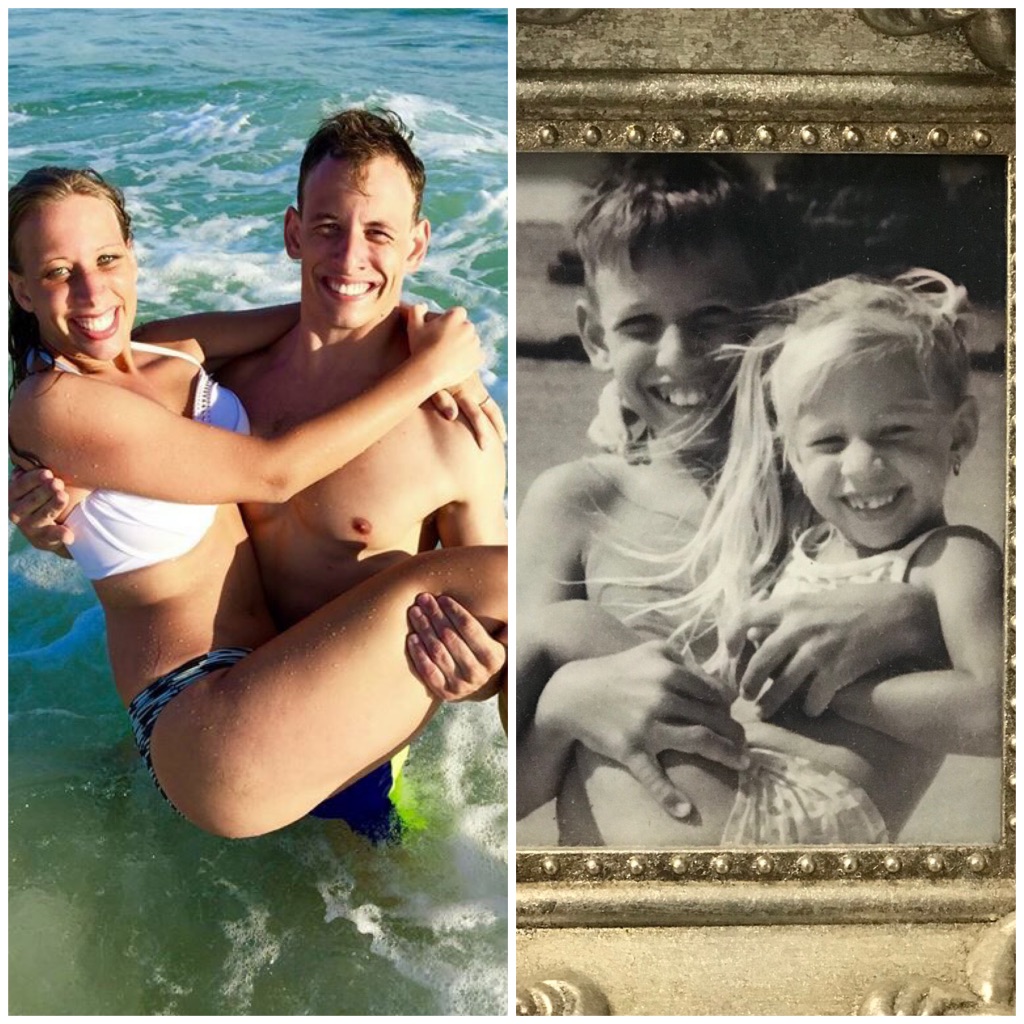
“Hopey, you’re my Hope. You make me believe that everything’s going to be okay and that we’re really going to make it.” That’s what my brother Patrick told me two days before he ended his life. Once he died, I really started to hate my name.

Before that, I was always a pessimist. It felt so ironic to be called “hope” when I so seldom experienced hope myself.

Now this? I hate my name. It feels so cruel tonight.

Why did I start writing these? I keep asking myself that. More precisely, why did I start publishing these? I’ve loved writing for my entire life. I used to write fantastical stories, dreaming worlds late into the night when I was just a young girl. Then in puberty I started writing to cope with my ever-changing world. Now, I almost exclusively write when my emotions cloud my head, spill out of my eyes, and pours from an ink pen onto a blank page.

So, why did I start publishing these?

After Patrick died, I seriously isolated myself. I did not answer my phone for over a month and I had no desire to make contact with the outside world.

In our American culture, grief is so private. Suicide is beyond taboo, and people in mourning may be given three days of bereavement leave. Three days… how pathetic. Our culture almost treats grief like something to be ashamed of or to be quickly gotten over. Because of this, death and grief are seldom discussed and very few — especially at my ripe old age of 27 — people have much of a framework/understanding of mourning and grief.

Grief shouldn’t isolate. It should be something that pulls us all together, something that makes us stop and hold one another closer, something that prompts us to change our lives for the better.

As my friend Olivia Chancellor always says “Alone is a lie.” Maybe if I share my thoughts, others will have the courage to share theirs too. Thoughts can be scary and painful and feel so isolating, but alone is a lie. “Everything that is exposed by the light becomes visible–and everything that is illuminated becomes light,” Ephesians 5:13. It’s only when we share our darkest thoughts that we are truly able to heal from them.

I want to live. I want to have a life full of beauty and joy and pain and wonder. I want to experience it all. I want to be fully present. I want to experience life to the full in every possible way, no matter how it hurts.

I don’t want to move on from this. I will be carrying this for the rest of my life, and I want to grow and learn to carry this with grace and love and even hope. I want to live, and I want to live well.

Love Enduring

Love bears all things, hopes all things, believes all things, endures all things. Love never ends.

I Corinthians 13:7-8

I wrote in a letter to my deceased friend’s parents three years ago (2020).

You hear the verses in weddings, but are they not just as applicable at funerals?

Grief is love that endures – beyond life and beyond loss. It endures. It remains. It loves against all things, against hope, and against the belief for its object of adoration to return.

In the end, it’s love that goes on.

It can make us bitter or it can make us springs of life and of hope and of beauty once more.

Where there were once caverns of bitterness, may there be fields of tenderness.

Where there were once deserts of anger, may there be harbors of forgiveness

Where there were once rivers of sorrow, may there be streams of mercy.

Love transforms us in unfathomable ways. Lost love breaks us with the bleakest measures, but our response to love and love lost distinguishes us entirely.

Some respond out of anger, some shut down in sorrow, and some pretend through avoidance. Each response is unique, with each respondent clinging to the response that feels the most emotionally safe.

Friends and strangers hold their breath and peer at grievers in hopes of a response that will provide them with an image of the grievers’ hearts.

How quick we are to observe the unfathomable, but how slow we are to communicate the tragedy. We look with bravery but cower in speechlessness. All the while, the griever, the sufferer, sits in isolation and trapped in love’s loss.

With fortitude, the sufferer remembers his or her enduring love and allows that mercy to shape the day. Love and truth tear away the temptation bitterness invites: these tools patch up lost love’s damage.

Patched, but not healed. Bandaged, but not mended. The sufferer must reach out beyond the frailty of his or her understanding and leap towards something more. The promise of more – the promise of the fullness of life.

Choosing to trust God beyond all belief, the griever leaps into freedom and the chance for redemption. The chance to experience the beauty of life and the beauty of love restored. The chance to overcome bitterness with a happiness long forgotten. The chance to live abundantly despite every odd being against the individual.

This, this is love enduring. This is love unending. This is love restoring, healing, and beginning.

I Write to the Griever; I Write to the Friend

Shame cloaks one in fear.  Fear keeps one in isolation.  Isolation repeats the cycle. 

It’s the tragic irony that prohibits us from knowing how to reach out to others when we need them most, and it’s often that same irony that keeps others from reaching out to us. 

The concealment of shame safely shields one from oneself and from others – at times I have been afraid to voice my concerns and share my story simply because the story itself frightened me.  Sharing makes life’s nightmares more real.  Other times, the fear of another’s someone misunderstanding has kept my fingers from typing and my mouth from speaking. 

But where does one turn when he or she internalizes those matters that are too dangerous to share with others?

I look to words – to books and to music, to poems and to plays – but what happens when there are no words?

The prevalence of centuries of literature whispers God’s mercy: one looks to the Psalms for comfort and contrition, the Old Testament stories and New Testament parables for history and application, and the prophecy books for detailed truth of who God has always been.  These precious words preserve timeless truth. It is God who bestows light and life into man, and man who reflects the image of God (Genesis 1, John 1). 

Mankind mirrors fractures of God’s mercy, not because God’s mercy is broken, but because we are broken and fallen creatures.  Mercy cracks through the brokenness of man, reflecting the glory of God, through the gift of man’s words. 

Words meant to heal, words crafted to explain, words written to comfort.  Words to bring the shamed out of isolation and into compassion: words powerful enough to help the confused and broken feel understood and validated.  

I didn’t get those words.  I couldn’t find them. 

When my world fell apart, I fell with it, and there were so few resources to explain.  No one writes about the loss of a sibling, though most of the deceased are survived by siblings.  It’s rare for young people to experience and detail loss. 

And grieving a “complicated death” (ie: suicide, murder)?  Some psychologists write to attempt to explain, but few first-hand accounts exist.  These deaths are shrouded in the shame of the survived, leaving the survived isolated, tabooed, and unreached.

I intend to share the depths of a griever’s experience as a sibling, as a friend, as a woman, as a youth, and as a survivor.  In weeks to come, I will share excerpts from my journals to convey the intensities of loss and the miracles of mercy. Some excerpts may be incredibly intense and seem hopeless, but these are the details of redemption and lament.

In the end, we’re each the griever and the friend.

So, let’s break the cycle.  Truth is not powerless. Isolation, shame, and fear are powerless.  

A Solemn Prologue

In the busyness of life, I nearly forgot my own.  I nearly forgot my past – who I was, where I was, what life was like while I was there. 

I nearly forgot the tears, the heartache, and the traumas. I nearly forgot that I was such a young girl dealing with such developed problems.  I was such a child, scared, and hiding, yet mandated to make mature decisions.

I was 14 the first time I witnessed someone lose his mind to the brink of insanity.

Summer 2012

What a child.

I was so young, enduring too much beyond my own comprehension.

Even now, colleagues marvel at what I went through, and yet I expect myself to be normal – to act like a person unacquainted with loss and torment.

Torment. Absolute torment.  It was hell and I didn’t even know it, because hell had become normal.

Normal was hiding, wrapping clothes around me as a shelter to cry in peace.  So much hiding. So much crying.

And I never could have imagined how much worse it could get.  Oh, so much worse.

I can’t believe that was my normal. I can’t believe how much I hid from the world. Hide and hide and hide.

No wonder I have such difficulty grasping out of hiding.

I lived in Sheol. Abaddon was my home. I can’t believe I lived through it.

In some ways, I think I always knew someone would die.  Maybe I knew, somehow, that something else would destroy me.  Maybe.  Maybe I knew that I needed to be destroyed. Maybe it was always there in the back of my mind, hiding safely behind the clothes of denial.

I loved. That is the crime that caused me so much pain.  That’s the face I saw in the grave.  A man so wounded, he forced gravity to take the life out of him.  I was 21 years old when my brother stole his life from my arms, and I’m still trying to come to terms with that reality.

April 26, 2019

Behind the Canvas

Behind the canvased sky,

I see a river flowing free.

The rugged tapestry once concealed all that’s real,

But Time tore the Romantic landscape

And began to reveal the mysteries hidden behind.

Through holes, I glimpse the world that inspired its painter.

— — —

A few months ago, I scoffed as I read “I was twenty-seven when I learned that my days were numbered… I had been given the opportunity not many twenty-seven-year-olds could claim: the opportunity to count each of my days as precious.”  Anger and jealousy panged my heart: anger, because  I never wanted this “opportunity”, and  jealousy because I was younger when I was granted this “opportunity.”  I’m incredibly stubborn sometimes, and, in that moment, I did not want to think about the loss of my brother as an “opportunity.”  In that moment, I just wanted my brother back.  Jen Wilkin, author of None Like Him, continues, writing: “Any illusions I might have had that this life would last forever were effectively removed.  I learned a perspective that many don’t grasp until the aging process begins its faithful instruction in universal human frailty.” [1]

I mulled over those statements for weeks before I could finally adopt the author’s same sense of calm appreciation for having to face harsh realities at a young age.  Reflecting on the new perspective growing within me, I described it to a dear friend who lost his brother years before I lost mine:

Growing up, it’s like you’ve been painting a picture for your entire life.  Each joy or heartache you experience as a child adds light and darkness to your canvas, and, through the canvas, you see the world.  It’s beautiful but imperfect—it is not without its own sadness and glory.  The painting’s our framework—we create it and we focus so intensely that we forget it’s a mere painting.  Then, one day, Death happens, and he severs our paintings.  Our canvases cracks, our mind quivers and retreats in confusion.  It’s torn us, and it’s painful to be torn.  When we get past the hurt we feel at the breaking, we finally see it—there appears to be a light from behind the gashes.  Peaking in, there it is—the real world.  Our minds only painted them with what we thought we knew, but now, after the tear, we see it.  It’s beautiful and it’s sunny.  Of course, there are dark shadows and tumultuous areas, just like the ones in our paintings, but there exists a clarity and a depth that our paintings could never capture.  We finally see what’s real, and our pieces seem suddenly insignificant; our painting cannot be mended—the damage cannot be undone—but we see the Truth beyond our created canvases.  

My friend listened and calmly smiled at me, “It’s not just death, but I think that’s just a part of growing up,” reminding me of the universality of the human condition.

He’s right—we all have moments where everything that made our frameworks shatters and we’re left feeling vulnerable and shattered.  At first, it’s hard to see anything, but, in time, we begin to realize how our perspectives have altered.  We learn truths about God, about the world, and about ourselves that we never would have known.

Like Wilkin, I have been blessed to learn life’s brevity before my parents even appear old and frail.  Sometimes I envy those who get to enjoy their twenties free of the intense emotional toll that bereavement promises, but God is faithful to give me reminders that he’s redeeming the times.  He’s gently taking me by the hand and walking me down a path He knows I didn’t want to be on—a path He didn’t want me and my family to have to walk;  “The Lord is not slow to fulfill his promises as some count slowness, but is patient toward you, not wishing that any should perish, but that all should reach repentance” II Peter 3:9.  Christ did not wish Patrick’s death upon us.  Knowing that doesn’t make this any less painful, but it does remind me that God is trustworthy even in the darkest circumstances. 

— — —

So, I press on—uncovering more mysteries beyond the canvas I created.  Pursuing God as he bestows me with “a crown of beauty instead of ashes” (Isaiah 61:3). 

For now, life is calm.  It’s been a much-needed respite.  I continue to wrestle spiritually and emotionally with Patrick’s death.  Psalm 126:5 sings, “Those who sow in tears shall weep with shouts of joy.” I’m still very much in the first stage of that verse, but I am able to experience joy as well.  I’m not quite shouting about it, but there’s a calm gratefulness and happiness that permeates everything these days. 

I realized about two-weeks ago that life had calmed.  The storms have ceased for a time.  Now I’m living in the recovery—still afraid of aftershocks, still hesitant and cautious, still mourning deep losses—now, God helps me pick up my broken pieces and carries me beyond the waves into still waters (Isaiah 43, Psalm 23).  He’s my refuge and my hiding place when I’m too afraid of the world around me (Psalm 119:114).  He renews my strength.  In Him I trust, and I will not be shaken (Psalm 62:6). 


[1] Wilkin, None Like Him, p. 78

Pain’s Assault

Just when I think I’m going to be okay, the Pain materializes, reeling me backwards.  He grips me by the waist and drags me back, viciously ripping through the cavern between my lungs.   I attempt to remain calm, strong, and steady, but the horror engulfs my helpless body, robbing my mind of the ability to fight;  so I let Pain do what he must until I’m numb and lifeless.  Sometimes there are tears, more often it’s a silent defeat.  The ambush renders me vulnerable and knocked down: my fears and my weakness keep me pinned to the floor.  He hijacks me of all breath, and I halt:  If I process enough now, maybe he won’t attack me for a little while longerIf I stay here long enough, maybe I’ll learn how to get up again.  With new crevices carved into the cavern between my lungs, I’m weak, I’m alone, and it it’s dark.  Oh so very dark.

I’m weary.  My eyes year to rest and the gloom tempts me to surrender.  Alone, this Pain attacked me.  Pain contends to conquer as tears swallow my widening pupils, and, for a moment, he does win.

He comes haphazardly, begging for me to release him—Pain reminds me to feel.  He reminds me to heal.  He reminds me to rest.  He humiliates me.

When I’m hapless in his grasp and I think that all is lost, Pain flees.  My pupils dilate to a soothing light—the Father.  As suddenly as Pain assaulted, Christ enters, picking me up and tenderly drawing me into him.  He pierces through my shame, in my sorrow, and amidst my pain and becomes my strength.  While I am oh so weak, he carries my burden in exchange for his own.  He liberates me from my despair, calming all my fears, and restores me in his presence and with his community.  He reminds me of his faithfulness amidst a world prone to abandonment.

While I lie bruised and bleeding, he cleanses me of the wounds and addresses each trauma as it arises, assault after assault, revealing the the stripes he paid for my ransom.

I crumble before him, grateful, humble, and in awe of this loving Father.  He dresses my wounds and sends me back to my safe community—his church, his nurses—who see my lacerations and come along my side to help me heal.

No, they weren’t assaulted by Pain this time, but their pasts preserve the stories of their own scars.  This time, they’re stronger and they’re waiting to help change my wounds.  They don’t have my PTSD, they don’t live with my the memories, and they don’t know my horrors, but they see the manifestations of my fresh injuies.

With God guiding us all, they come along my side and teach me how to walk again.  I’m nimble and uncoordinated, requiring tenderness and patience.  I’m more sensitive than before.  I’m afraid, but I don’t want to be paralyzed forever, so I continue learning to walk by pressing into God and into his church.

I’m a survivor.  I survived the initial assault.  I live in the aftershock.  The horror has ceased, but its affects linger on.

— — —

I am healing—slowly, messily, gracefully, and dutifully—healing.

The days fluctuate: some are easier than others, some I cannot seem to concentrate and conceal the tears.  Others follow the pattern detailed above; sometimes the emotions surprise me and I feel like I should be “over it” by now, holding myself to a nearly impossible standard that, in turn, prompts me to feel failure, inadequacy, and guilt.  Grief is love that has lost its object of affection, and one cannot simply terminate one’s love, even if that love has been stripped from him or her.

So, I take “one step forward, and five steps behind,” and my healing progresses.

In the first three months after Patrick died, absolutely nothing made sense anymore.  All of my hopes and dreams and understandings collapsed within those months, and I was terribly afraid to live and to breathe and to know and to be known by others.  I was angry with God and angry with myself.  Disillusioned and then disappointed, I thwarted any intrusive thoughts of hope and of goodness.  Life couldn’t be good, I thought.  But, realistically, I was [am?] afraid to hope that life could be good again.  My hopes had been so violently stolen from me that I dreaded the thought of hoping again.  How can one continue to hope when someone else continuously takes everything she’s hoped for?  No, I won’t reduce myself to hoping again, I bitterly resolved.

Hope is a terrifying thing.  While alive, she helps us receive joy and cherish moments of mundanity, but if she perishes, we’re left behind with the trauma and disappointment of “hope deferred” (Proverbs 13:12).

 Nothing made sense anymore, and I did not want to make sense of anything my family and I were left behind with.  I harbored so much pain that I became too terrified to face it alone.  Most people I live near hardly knew Patrick—I cannot emphasize how isolated that can make one feel—and yet those nearest to me continue to graciously love, support, and encourage me despite my inability to pour myself out at this time.  God’s kindness and mercy broke through my “shelter” of self-preservation and He’s teaching me how to breathe in this new rhythm of life.

Perhaps we search for depth in others because it helps us process the depth of ourselves; we need one another and speaking helps more than I can explain.  At first, I was so afraid to voice my pain.  I was afraid that those around me would not be able to “handle” the truth of where my heart resides and would invalidate my feelings and my questionings, but, nonetheless, those in my life persisted to investigate my heart despite my protests.  God has opened my eyes and continuously opens them to see his mercy, and my dear friends continuously pursue me to show me how much they care about me. 

In this season, I don’t have much to give.  I’m overflowing with questions and slowly coming to a new understanding of life itself.  I am inquisitive and I am learning. 

I have to remind myself that the worst has already passed, and now I can enjoy a season of disciplined healing: one cannot heal if he or she lacks the willingness to do so.  Every day is new, every moment is precious. I see and feel new growth and new life all around me as I rest in God and I pursue healing in the shelter of his love.  God has been so kind to remove my fears and to reveal new truths to me. 

I am hurting, and this will always hurt, but I am happy and I am abiding in peace. 

Okay?

April 21, 2019

“You never give up on me”, the amazement flowed from the tears in Patrick’s eyes.

But, I thought, the truth is that I gave up on you years ago.

Yet I’m still here.

Maybe I tricked myself into believing that I gave up on you. Maybe it’s because I was well acquainted with the pain you cause[d], but I’m thankful that you realized I hadn’t given up on you even when I thought I had.

No, I never gave up on you. I believed in every single breath you gave.

— — —

I spent the last two months two months pretending that the most horrific events of my past did not happen. I went on eight different trips and visited 13 different cities; it’s funny how you can trick your mind into believing false narratives simply because you long for something greater. I want to believe that earnestness exists, that redemption persists, and that goodness triumphs.

But I don’t.

Or, at least, I didn’t.

Eight trips filled with laughter and memories, yet the plane rides or car drives confronted me with the realities I so desperately wished to ignore. On the plane and in the car–that’s where I fell apart.

You can only smile for so long before tears force their way out, leaving you exposed to an onlooking world. And on airplanes?? Lord bless those sitting next to me… they didn’t ask for this mess. Though, neither did I.

Thoughts on my final plane ride brutally scorned me: “If I love God, how could I _____?” “If you love someone, why do you purposefully act malignant?” “If I had done _____ would he still be here?”

One’s mind and heart quickly betray him in times of immense tragedy, rendering him confused and pained. Mine convinced me to ignore reality again and again and again, until reality assaulted my mind into submission. You cannot outrun the truth, no matter how bleak it is.

— — —

It’s was Tuesday night, three months and one day since we found out about my Patrick’s demise.

I’m in church and it’s dark. Unable to hold anything back, I release emotions I do not deserve to have–no one should endure circumstances like this.

My roommate Lauren reaches over:

“I’m proud of you, Hope. You’re finally grieving.”

Aaaaand I’ve cried everyday since. Moments so full of anguish that I stop breathing and have to literally remind myself how to function. WELCOME TO GRIEF, HOPE. It’s about time…

— — —

April 24, 2019

“I feel like we are a team specifically you and me to beat this. It means alot,” Patrick texts me.

“That’s right we are. You are going to beat this. Absolutely.”

“Every time I see you, you say we got this and i actually believe it for once”

I believed it too, Patrick. I believed it too. I still cannot believe that you are gone.

— — —

When you lose someone you love, it is as though all light has departed. Reality dims. Hope fades. Confusion suffocates.

Recklessness ensues when you stop believing in redemption: Satan tempts you to believe that actions are meaningless. You grew weary in doing good works. Look where they got you? I questioned as the tears soaked my sweatshirt.

The truth is, there are some things we will never let go of; we must live through the emptiness and press on because of Christ’s mercy. Sometimes the most disheartening circumstances are the manifolds of God’s mercy. While it’s laborious to perceive, there is much glory in earth’s eternal despondency.

I tried to stop hoping. I attempted to “give up” on those that I love dearly as a coping mechanism, but I cannot.

Even after the tragedies I’ve witnessed first-hand–no matter how “safe” disassociation and pessimism may make me feel–I cannot stop believing in redemption.

I don’t recognize much “light” these days. Engulfed in darkness, wrestling through disappointment and heartache: nonetheless, I still believe in redemption.

I see hurting people all around me, the heartbroken who respond by attempting to break themselves and to break those around them, but somehow I still believe in redemption. Side note: Please, seek help and guidance when you need it, friends. No one is past redemption’s threshold–if he would only focus on what he knows to be true. Not all is lost.

In The Fellowship of the Rings, Tolkien exemplifies the relationship between hope and heartache: “The world is indeed full of peril, and in it there are many dark places; but still there is much that is fair, and though in all lands love is now mingled with grief, it grows perhaps the greater.”

I cannot see the goodness in this situation, and I feel far more broken than I can express, but I trust and I hope in what I know is True.

In Loving Memory

Life is too precious.


My Grossi met Jesus March 11, 2019.  She listened to Him release the words, “Well done, Thy good and faithful servant.”  I wonder if He had tears in His eyes as He said it.  God watched Mary Ellen endure her deepest joys and most anguished sorrows.  She made it—she fought the good fight, and she finished the race with joy.  I wonder if it brought tears to His eyes.  

He had comforted her when she mourned, as He comforts we who mourn.  


I think that the hardest part about grief is knowing that you will never be able to make memories with that person again.  Death prompts you to remember all the little things that you didn’t realize you would miss.


Her smile, her laughter, her lipstick, her spunk.  Her resolution.  She was stubborn, as many of you know, and she was strong.  I admired her tenacity.  


It’s in those little moments that you grow to love someone—it’s the collection of those small moments that builds our trust and our admiration.  Those small, insignificant moments.  

And it’s often not until death that we realize the magnificence of all those moments.  


Mary Ellen Schraner built her life from a collection of moments that highlighted the importance of faith, family, and friends.  This church and these people made those moments.  You, here today, were everything to her.  She found her foundation in Christ and her blessings and joys in you.  


Nine years ago, my mother gave her a notebook entitled Grandmother, Tell Me Your Story.  Within it poses the question, “What are some of the things you hope your children and grandchildren have learned from you?”


Her answer: “Faith—the belief in God, Cooking—Hospitality,” which I know many of you inherited, and “peace in the family.”  Mary Ellen taught me those three things, and she taught me to have fun and to celebrate when life calls for celebration.  She prayed for her family more than anyone I know, she welcomed me to her home many times, and she filled my heart with joy and abundance.  


It’s strange that she’s not here with us.  It doesn’t resonate well.  My mother once said, “We are eternal beings.  We were never meant to say goodbye.”  I suppose that is why it is so devastatingly painful to miss someone who deposited memories into our own life that made us have a life worth living.


So, as we hold our breath, and as we will the world to stop spinning, let’s take the quietness of grief and utilize it as a reminder to cling to the mundane moments.  Let’s hold one another a little closer, for a little longer.  Life is far too precious and far too short to cling to anything but those who love us.  


I John 2:17 reads, “And the world is passing away along with its desires, but whoever does the will of God abides forever.”  This became one of my favorite verses the first time I endured grief from a separation that feels so very permanent, but the reality is that permanence fades when you recall Christ’s three words: “It is finished.”  


Mary Ellen was ready to meet the Savior of the world, the God that held her tears in a leger.  The God that gave her breath, and the God that took her breath away.  The God who allowed tragedy, the God who prepared and encouraged her through devastation.  The God who blessed her with so many people and things.  The God who allowed her to live a full life—she was not afraid to meet the God she knew so well and loved so dear.


I wonder if she brought tears to her Savior’s eyes—happy tears.  Christ knew that He brought her home.  The heartache and the pain of this world has left her, and she has been made alive in the fullness of Christ.  


While we cry because we miss her, I think that Christ may shed a tear in welcoming her home.