Ryan O’Neal, creator of Sleeping at Last, composes astoundingly beautiful melodies with profoundly deep lyrics and is thus one of my favorite artists. His ballad Saturn hosts the aforementioned lyrics. O’Neal pens reflective songs portraying the ornate nature of life, drawing imagery from astronomy, personality, faith, and earth.
Lately, I’ve been pondering about life’s beauty and tragedy. Too often we hear the derogatory phrases about our existence; “Well, that’s life,” as if the universe demands we be disappointed, “Life sucks,” “Life is hard,” and a deluge of other cliches with similar messages. We create an undertone of disaster and negativity with these phrases, yet they simultaneously minimize the struggle. “That’s life [so stop complaining].” “Life sucks [so move on].” “Life is hard [so stop expecting anything different].”
One of my greatest passions is normalizing the depth of the human experience through delineating natural emotions, and I’m an immense proponent in admitting how painful life can be, but I’m drawn to the simple truth of O’Neal’s words. How rare and beautiful it truly is that we exist.
We teach one another that growing up is painful, but we say it as if that’s “just the way it is.” Life isn’t painful because God or the universe or some force is out to get us — life is painful because other human beings hurt us and because we often hurt ourselves, too.
Life is not bad, life is not hard. People’s choices are bad and they make it hard. Sometimes our choices are bad, and it makes life hard, too. But life at its core is not hard — life is a gift.
Life is precious. We see this in the beauty of new life, we see this in the dignity of a life well lived, we experience this in the relationships that give us life. Life is not to be condemned but to be loved, shared, explored, and freed.
I reject the concept that life is hard. Yes, so many things in our lives produce unfathomable amounts of pain that we will carry with us forever, but that truth does not negate that life is a gift.
In this life, we have ample opportunity to heal, to change, to love, to grow, and to enjoy this one beautiful gift that we have. It is our responsibility to ourselves and to one another to tend to our lives. In taking care of ourselves, in knowing what we want and need from life and acting on that, we transform our lives and undoubtedly positively impact the lives of those around us.
Life is hard because people make it hard. Life is hard because people hurt us, neglect us, betray us, and wound us. Life is hard because we ourselves, too, make choices that hurt ourselves, neglect ourselves, betray ourselves, and wound ourselves. May we remember that our lives, each, are gifts to ourselves and to one another.
We have got to stop talking about how life is terrible and how life is tragic and how Life/God/The Universe exists to make us miserable. That narrative is killing us. Life is not about suffering. The purpose of life is not in suffering. Loss and hurt and wounds are powerful and they drastically impact our lives, but life is so much more than our heartbreaks.
May we engage in life’s beauty, tragedy, and lightheartedness. May we enjoy what life has offered us and the goodness that life brings us. May you heal from the people who hurt you and may you heal from the ways you have hurt yourself.
Your life is precious, your days are your opportunities to change your world. Life is not out to get you. God is not punishing you. The universe is not hurting you. People hurt you, you hurt you, but that is not the final say in your story.
Your life is beautiful and your ability to change your world will change the world for the better, if you let it.
May we remember how rare and beautiful it truly is that we exist.
I’ve always loved Valentine’s Day, and I attribute most of that to my parents. They celebrated one another and each of us kids: Mom gave gifts to the boys, and Dad gave a gift to me every Valentine’s Day until I got married. When I lived with them, Dad would leave a gift outside my bedroom door to greet me in the morning. It’s a great way to raise one’s kids because it made the holiday special from the beginning. I never minded being single on Valentine’s Day. I love getting to celebrate love, whether my own or someone else’s. I love the hearts and the pink and red and the genuine giddiness and galentines, too! Sure, hallmark and corporations push the holiday but hey, I love any excuse to celebrate Scott. I love opportunities to do something special for my love, and Valentine’s Day provides just that!
Buuuut… Losing my mother to suicide changes everything I knew about love. Abandoned by my mother, rejected by her family, shunned by the majority of her church leadership, and my parents’ marriage nullified by her death— four institutions that were once steady in my life, irrevocably destroyed. Three groups that made the contentious decision to harm me via violent action and lethal passivity, and one marriage that created a family obliterated.
What is love, if not something that shatters you?
As I’ve written before, you can’t feel a mother’s love from the grave.
The last fabrics of security slowly tear from me. It’s fortunate I married before Mom died — I’m not sure I would believe in anything concrete enough to marry after she passed, and I’m quite thankful for my husband.
Like any couple, Scott I do our best to create and build our own love, and I try my hardest not to fear the possibility of every form of love slipping from my fingers.
There’s a pendulum in my mind that swings between the people I never thought I’d lose and the people I am amazed showed up.
Those who know deep pain speak a language entirely foreign to those who don’t lean in. Empathetic witnesses can learn this language with study and exposure, though they speak it with a distant accent.
Not everyone can show up, and that’s okay. Everyone can show love. Love marks people: it can heal them and brighten them, unrequited love can mar them, the absence of love can destroy them.
My father and my surviving two brothers remain a chain of unbroken and unwavering dedication towards each other, for now. I will always fear another suicide in our family — odds for repeated suicide increase dramatically after one suicide in the nuclear family. With two in mine, we survivors are 600% more likely to end our lives — but, we four survivors have been incredibly supportive towards one another.
Aside from these four, I remind myself that it’s the people who have chosen to show up time and time again that have aided in my support and healing. It’s the “aunt” and “uncle” I didn’t realize weren’t related to us that have become more family to me that my genetic relatives. It’s the friends that have shown up when siblings have checked out. It’s the Christian [and non-Christian] community disconnected from any one church that came together when my [past two] churches stigmatized us. It’s the people that weren’t necessarily“supposed to” be there who have shown up the most in my life, and this isn’t an uncommon phenomenon. We all know the saying “Friends are the family you choose.”
I don’t write any of this to bash my mother’s family or her church, and I don’t want people to weaponize my words against either party. There has been enough hurt, and it’s 2026: people have nearly unlimited resources, cell phones, and endless ways to reach out to one another. If they wanted to fix things, they would. It’s been eight months since my mom died — they don’t want to fix things, and additional [well-meaning] people getting involved will not change that. Sometimes the most loving thing one can do is let go. So, I let go of them. I release any hope of healing or restoration. Maybe it happens, maybe it doesn’t, but realistically I haven’t needed them to come this far.
Sometimes we are forced to create meaningful and beautiful lives without the people that were supposed to be there for all of it, and sometimes it’s because of death while other times it’s because pain separates the living.
To those who have shown up, thank you. I see you, I love you 💙. To those who can’t show up or chose not to show up, I love you, too. Take care, be well. Pursue healing and love.
The point is — this is what it’s like to survive suicide. A whole world erodes, and the roots left turn out to be beautiful and complex and mangled in grief.
The best people come to tend to and to water these roots, and one day new life and new dreams will bloom from what they have cared for. Above all, love each other deeply. Love heals a multitude of sorrows.
It’s been 231 days since my Mother ended her life. She was 51. I was 27.
It’s been 2,468 days since my brother’s suicide was discovered. He was 28. I was 21.
It’s been 2,836 days since my close friend drowned. He was 25. I was 20.
I could list a few more death dates, but these three have been the most sudden and traumatic. They are the most obvious and the most public form of trauma that I have endured.
* * * *
When I was a preteen and teenager, I couldn’t wait for my twenties. I couldn’t wait for the freedom that comes with growing up — being able to drive, choose a place to live, and figuring out what I wanted from life. I longed for the independence and relished the idea of being free and fun and maybe beautiful.
I started college at age 16 and was well on my track for freedom and independence — kind of. I had the most supportive parents in the world: they agreed to let me use Dad’s GI Bill and at 17 I “moved out” into a college dorm.
Dinner before Mom and Dad dropped me off at UniversityEach of my Sibling’s Favorite Bible Verses. Notes from my parents and brothers on the back of each letter. They made it as a gift for my first dorm.
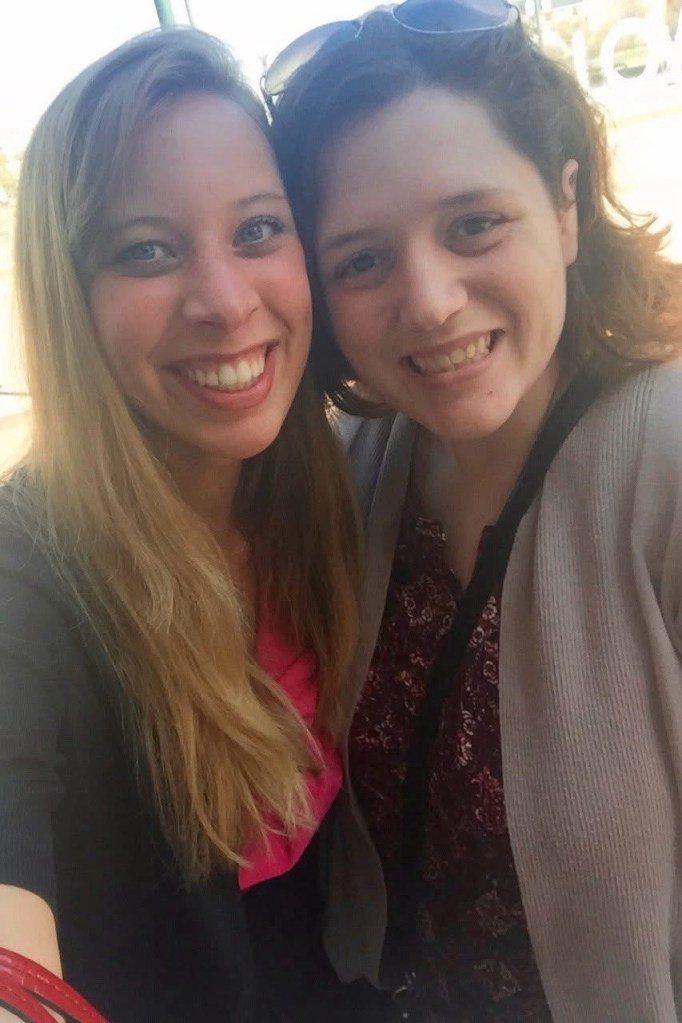
In college… well, I was just about the most boring human you’d ever meet, ha. You can ask my good friends Brittany and Becca to verify — we called ourselves the “Grandma Group” because we woke up early and studied all the time. They’re actually the friends that pushed me to start this blog nearly 10 years ago (read my bio for more info on that).
I wasn’t fun. I don’t think I’ve ever really been fun, but I did love the freedom. Turns out, all I really wanted freedom to do was read books and drink coffee peacefully. There’s not a whole lot of peace in a houseful of teenage brothers 🙂 but there is a whole lot of love.
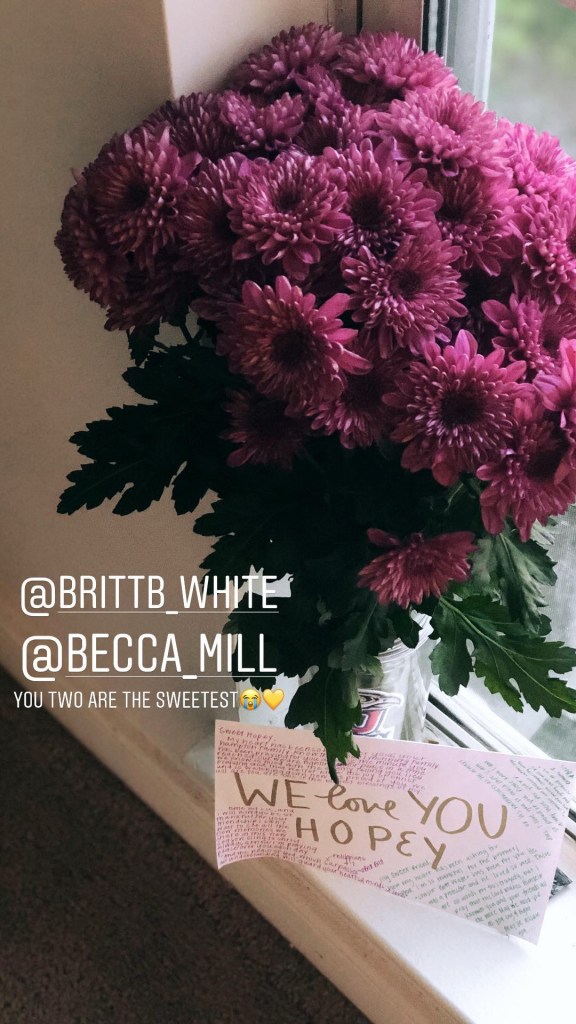
My sweet friend drowned mere weeks from my graduation… suddenly my exciting twenties sank into the vast ocean of grief. As JK Rowling imaginatively defines it, there really are two types of people in the world: those who see thestrals and those who don’t. Brittany and Becca lovingly cleaned my apartment when I went home for my friend’s funeral, and they left flowers to welcome me when I returned. Professors extended capstone deadlines, and Lauren even helped me write some of my final papers.
Brittany and Becca left this when they cleaned my apartment 💙
My parents moved the day I graduated college, and I wasn’t sure where I’d live anymore. I was searing from a world stripped of all confidence and hope. My friend Rachel took me under her wing and let me stay with her while I tried to figure out my next move.
Sweet Rachel 🩷
366 days later, my brother Patrick went AWOL. I spent the night with him the evening before our friend’s one year death-anniversary. The morning of the one year, Patrick gave me a book, he told me he loved me, and I never heard from him again. I haven’t brought myself to read that book. Those same sweet friends showed up then too, and a few more. 💙
💙There’s so much shock in initial grief — you’re just so happy to see the people who are alive 💙
11 months after that, I left Virginia to join my parents for a month before I moved to Florida. I only told two people what day I would leave Virginia… I didn’t even tell my now husband, despite his pleadings to let him know when I would be gone. I think hurt a lot of people doing that, but shame kept me from allowing people to say goodbye — I didn’t think I deserved it. I thought people wishing me well would be lying… I wasn’t much of a good friend back then. My theme song was The Prince of Spain’s “Rising Sun,” and so I went just like the lyrics.
At 22, my dog Nala and I travelled across the country to start our new lives in Sunny Florida. I’d accepted a great job in a town I’d never heard of, my friend Tori gifted me Nala, and we were off to create a new and exciting life. And it was new and exciting! I had a beautiful apartment and I had hopes and dreams once more. I had a safe place where I could read in peace once again. It was such a turning point for me, a clear mark of sunshine and healing.
Mine and Nala’s first stop on our move.
My parents and brother Sawyer joined me not long after. Life was beautiful for me. Simple. Healing. Years of healing and new life. I pursued EMDR — a specialized trauma therapy — my second year in Florida and it changed my life.
My parents buying me things for my first solo apartment 💙So much growth and healing in this sweet space.
I learned about my own attachment style and how to navigate various attachment styles, and I learned how to better love and accept love. Much to my surprise, I reconnected with Scott and our friendship bloomed into a loving marriage when I turned 25. I remember thinking at the beginning of our relationship that Scott had seen me at my worst and he still loved me — he still showed up, especially in times where I couldn’t show up for myself, much less anyone else.
The night that changed everything 🤍
You can do so much healing on your own, but there are some forms of healing that can’t be done outside of relationships; relationships, especially marriage, expose insecurities and triggers people typically can’t realize they have on their own. Trust issues rooted in past relationships surface even in the most trustworthy of partners. So many triggers and arguments have so little to do with the person in front of you. We had fun in our first year of marriage, but a lot of trauma resurfaced. Moving was a huge adjustment for Scott and I tended to take that personally — as if him missing home meant he didn’t love me or our life together.
Our second year, though, brought a new golden age. I dared to hope. I dared to dream. It was beautiful and it was sweet and it was fun. We explored everywhere together… and then we’d bring my parents back the next week :). We did almost everything with them. It was idyllic. Our lives were measured with so much love, support, and hope.
Then bullets pierced the contentment we shared as murder and suicide ricocheted through our lives.
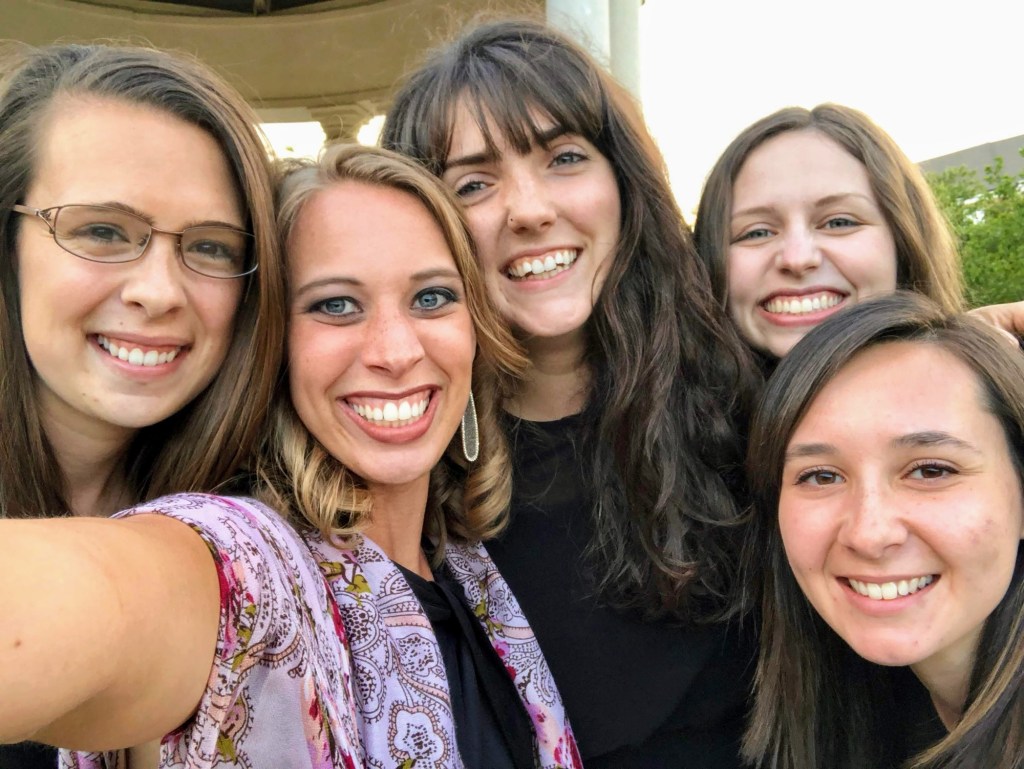
Some of those same friends, Brittany and Ean and Lauren came back for the third time. They did everything for me… when I have done so little for them. They cared for my home, they cared for my family, they cared for me. So many more friends joined along the way — other friends in multitudes of states sent their support or show up, friends in Florida came to our aid as well.
* * * *
I had been looking forward to my thirties, begging to leave behind my twenties. If I’m honest, most days I really don’t want to be alive. I don’t want to do the basics of going to work, making dinner, keeping up with a home, and socializing. It’s not that I want to die, I just don’t want to live through this and through whatever else is next.
I thought in my early twenties that I’d made it through the worst of life, but it just keeps getting worse and the losses keep getting more painful. I’m the youngest in my family — I always assumed I’d be the last to die, but I didn’t think I’d lose so many so early and to such violent ends.
This week I’ve given up hope that my thirties will be any better than my twenties.
I don’t believe that life is good, but I’m starting to believe that it isn’t necessarily bad. There are many, many, many things and events in life that are bad, but that doesn’t mean life as a whole is bad. It’s not even neutral: life is beautiful, and it is a gift.
Despite everything, as I type these tragedies, I see the beauty of the friends who have shown up again and again and again. I haven’t been able to be that person to them, but they’ve been that to me. They have lived and loved and given and given — they have made the worst of my life live-able and bearable and beautiful. These and so many other friends… They have made life kind. They have brought healing.
When I see the beauty around me — in friendships, in nature, in kindness — it reminds me how much of a gift this life truly is. Awe prompts me to think of all Patrick and Mom gave up and all they’re missing out on.
While I may not have the energy or motivation to engage in basic life tasks, these things ground me. Maybe tragedy will continue to define each decade of my one wild and beautiful life, but as long as I’m living I know that more people will come alongside and join me in these tragedies, and that is a very beautiful thing.
I’ve written over 60 posts since my Mom ended her life, and maybe a handful of them have alluded to other people. I try primarily to write about my own experience, but some dramas obviously include my husband, dad, and siblings. I work not to tell their stories, though our stories are intricately untwined, but their stories are their own. Their experiences are their own: their own stories to share, their own experiences to suffer, and it’s not my place to create memoirs of their lives.
However, today is different.
I dedicate today’s post to my Daddy 💙
My Daddy, who’s had to endure what no one should endure. My Daddy, who’s had to be too strong his entire life. My Daddy, whose life has never been easy. My Daddy, who’s lost a son. My Daddy, who’s lost his partner and best friend. My Daddy, who’s fought his whole life to create a better life for his family, but whose family betrayed this life.
This weekend is my parents’ anniversary. It was Wednesday this week before I realized just how much that fact stings me. I know it’s agonizing for my father.
I journaled a few weeks ago mourning the loss of both my parents. I miss when I had parents, now I just have a parent and my parent is having to reinvent himself because my mother left us without warning. I love my Daddy, I love every version of my Daddy, but I miss the version of my Dad that had my Mom.
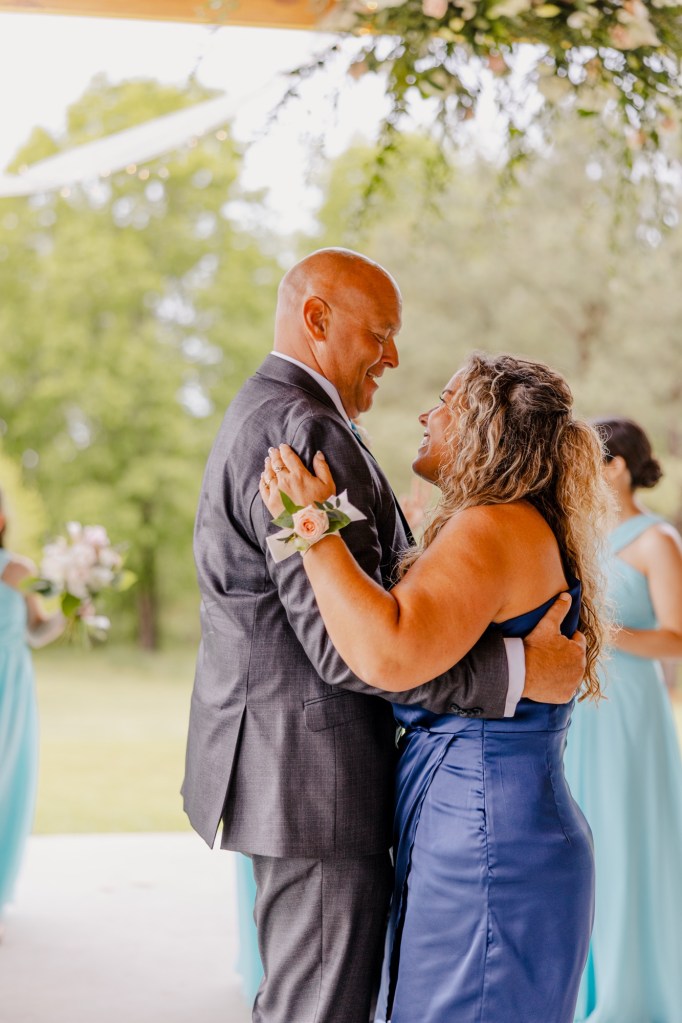
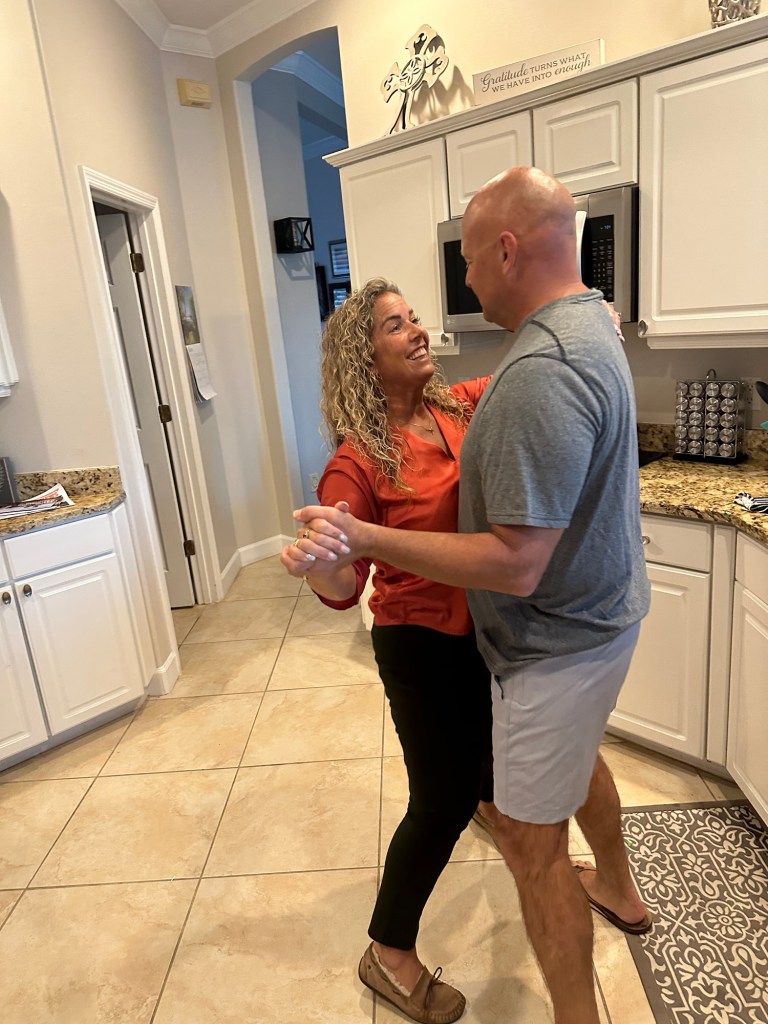
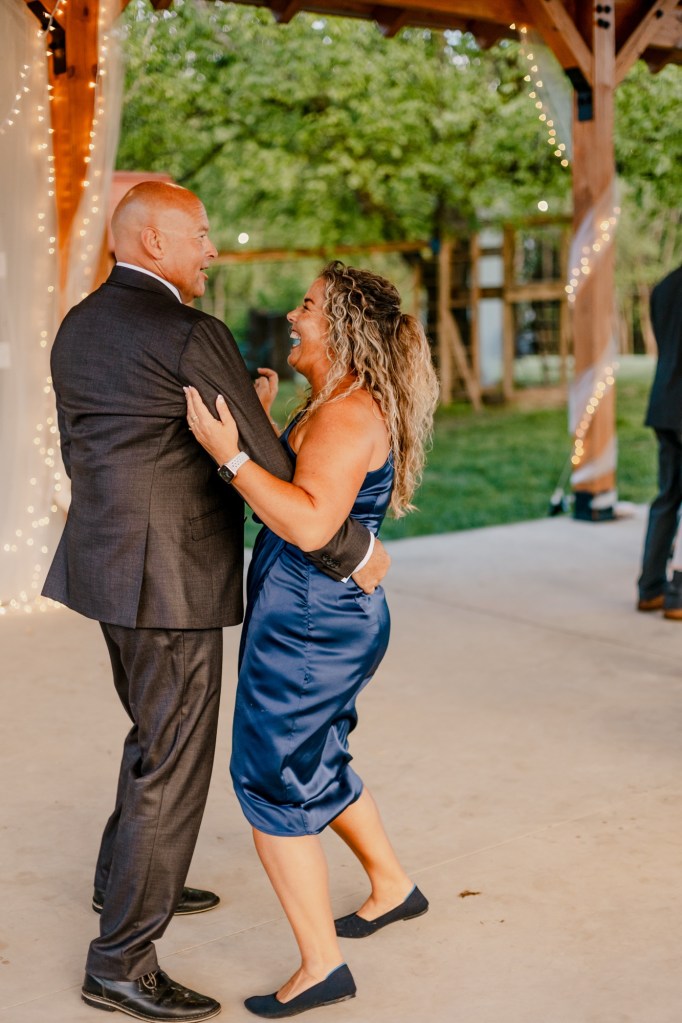
I miss the security of having two parents who loved each other so deeply. I miss them randomly dancing with each other in the kitchen. I miss their adoring eyes. I miss their fun. I miss their smiles, I miss their joy together. I miss their partnership. I miss admiring them. They endured so much together — always together — they loved to be together. My Mom used to say that being apart for my dad for more than a couple days was agony, especially after my brother died. They helped each other. They loved each other. I mean, they really loved each other.
Together, holding hands, laughing, sharing, just being together. They could do anything together.
Together, they build a beautiful life. They raised a beautiful family. They helped us children through tragedy after tragedy. They cared for us during all seasons. I miss that, I miss them. They seemed to have every answer in the world — not proudly, not that they told us every answer in the world, but that they simply lived a life that testified that anything could be conquered and endured together.
But now here’s my Daddy, my wonderful Daddy, mourning his wife on the anniversary of their beginning. The anniversary when two names became one, and my mom was crowned with a new name and a new life.
They escaped the turmoil of their upbringing and built a beautiful life for each other and their children. A life built on love, centered around family, and upholding the strongest foundation any child could long for.
I love my Daddy.
I’m grateful for this life he curated for me and my siblings. My brothers have a strong and beautiful sense of family that we inherited from my Daddy. Family has always been the most important thing to my Daddy, he sacrificed so much for us.
He’s the best Dad in the world. He always has been. I’ve never seen someone so kind, tender, and loving to his wife like my dad was to my mom. I love spending time with him, I love living near him, I love working with him. I love that he’s my Daddy.
I love his depth, I love his beautiful mind. I love his realism and his commitment to continual growth. I love his vulnerability and honesty. I love him. I love him so much. I love that he always helps me, I love that he listens to me and speaks life and truth into me. I’m so grateful for my Daddy. He’s the best.
I’m so sorry, Daddy. I’m sorry you have to live through this, too. I know Momma loved you. I’m so sorry she left us when she was unwell. I know you would have done anything to prevent this. None of this is your fault, Daddy. I’m so sorry for all the hurt and pain and wrongfulness that has come since her death.
I love you, Daddy. I’m so sorry that every day without Mom sucks, and I’m sorry this weekend amplifies that pain.
I’m so proud of you, Daddy. I’m so proud of your battle to continue living each day. I’m so proud of you for doing the hard work of healing each day. I’m so proud of you for being my Daddy. I love you, always. I love every version of you, and I’ll always love you.
“Merry Christmas!” “Happy Holidays!” “Joy to the World!” We proclaim in the darkest season, with the brightest lights illuminating our obsidian neighborhoods. The most light-centric and joyous holidays amidst the coldest and darkest moments of the year — it’s a beautiful tradition. Warm hot chocolates in our hands and cozy candles on our shelves, and sorrow in many of our hearts.
Yes, firsts are hard. First Christmas without Mommy. Mommy, Mommy, Mommy. Holidays are particularly difficult because they are family-centric: extended families gather and honor traditions. Most of our siblings have kids… all my nieces and nephews have a Mommy. My husband has a Mommy, and his Momma has a Mommy too. Everyone has a Mommy… except me and my siblings. “Why don’t I get to have a Mommy?” I ask Scott, through reddened eyes. Most of us have a spouse, too, except my Daddy. She’s gone now. Holidays and family gatherings like these amplify the isolation we already feel. The void my mother left companions us always, but holidays can make it feel as though a spotlight highlights the void.
Togetherness, though, feels like medicine for this severing pain. When something like this happens to one’s family, uniting with surviving family members is like taking aleve or ibuprofen: we’re all fully aware of the gaping wound, we all still feel it, but there’s a measure of relief in each other’s company. Days leading up to the reunion pass slowly and agonizingly. We hold our breath until we can hold each other in our loving arms, united by our terribly sealed past and fighting to press on towards a healthier future.
There’s ease with this reunion. There’s a peace in shared pain, an unspoken understanding, and a space to speak about a pain only we few understand. It provides a chance to process together and to share our pain… togetherness brings healing.
This Christmas, this thought assails me: two-thousand years ago, a baby lived and died and changed the world. Six months ago, my mother died because she wanted to meet that baby. She didn’t want to wait any longer to meet her precious Jesus. These days, I often wonder if my family would have been far better off without the Church (global, not any specific church). The idolization of heaven has killed two of my family members. That’s not what Jesus wanted, I know, but our pain-saturated culture seems obsessed with this unobtainable paradise.
The point of life is not to get to heaven, and heaven is not our home… at least, not yet. Heaven may be God’s dwelling place, and it may be the land of the dead, and it may be a place of renewal and eternity, but heaven isn’t everything and it’s not the point of our existence.
Jesus came to restore the earth. Jesus came to heal the earth. Jesus didn’t come so that we would scorn and leave the earth, and Jesus didn’t come for Christians to wish their lives away hoping in heaven. On my Mom’s best days, she knew that. She taught that, she lived that.
I’m not sure if my family would have been better off without the Church, but I think dreams of heaven are dangerous to those who suffer from mental illness.
Bring heaven to earth. Bring healing to earth. Bring joy to earth. Bring peace to earth. Isn’t that why Jesus came?
She’s not dead in my dreams. She’s never dead in my dreams. Sometimes she’s a ghost, but she’s never really dead. She’s always responsive… or ignoring me, but nonetheless she’s active.
But they’re always about death. In the first few weeks, I most often dreamed that she was a ghost or just too busy to talk to me — in these dreams, I knew she was dead. She wouldn’t talk to me in these dreams. I begged and pleaded for her to talk with me, but I could never quite reach her.
Now, nearly six months later, we catch her before she chooses fatality. Sometimes it’s just me and Mom. Sometimes my husband, Dad, and siblings are there too. She talks to me in these dreams. I/we are always trying to talk her out of it — to talk her out of dying. To beg her to stay. But they all end the same — I wake up. I remember she’s gone and she’s never coming back. Sometimes that brings tears to my dull eyes, sometimes it cultivates anger and protest, and sometimes it steals my breath and replaces it with anxiety.
I watched Where the CrawdadsSing the day before my Mom died, and I remember feeling so comforted when the main character’s mom walks out of her life forever. It’s a main plot of the movie — trying to figure out how a mother could leave her young. I remember thinking my Mom would never.
Ha. Isn’t life ironic like that? It’s so cruel.
* * * *
This has been of the hardest weeks to do anything. To get out of bed, to go to work, to want to do anything. I’d rather turn my phone off, ditch work, and cut myself off from the rest of the world for a couple of weeks and just sleep.
Scott woke up the other night to the sound of me screaming: he reported that I was staring at our fan, shrieking. One of the strangest part about night terrors is that one won’t recall the dream whatsoever, and people experiencing night terrors won’t typically wake up on their own. They’re not very common for adults, but almost always caused by immense stress. It’s unsettling to wake up to the sound of yourself howling in horror and shaking violently.
And then you have to go to work the next day, put on your best “I’m okay” face and complete whatever task is due by whenever deadline, half alive. A shell of what once. A candle burnt to its wick, melting whatever potential was once there.
The closer we get to the Christmas, the less I want to get out of bed. But I have end of year deadlines, places to be, things to do. So we trek on, one abysmal step at a time.
* * * *
I look forward to dreams now. They’re the one place I get to interact with my Mom, even though they’re just visages from my broken heart and my weary mind. Ever so briefly, it feels like she’s with me again, even if the dream is sad and dark and heavy. At least I “saw” her, at least I could spend just a few minutes with her ghost.
I leave old sticky notes from my mother around the house because… what else should I do with them when I find them? I don’t want to throw them away and I don’t want to put them away, either. So they sit out, collecting dust, beguiling to be read, hauntingly there.
In the first few weeks following Mom’s death, so many loving people gave and gave and gave. Aside from meals that nourished my whole family, people gave me face masks, candles, stickers, socks, etc.
Peoples’ hearts can be so beautiful in heartbreak.
At the time, I had so little capacity to process the gifts, so I set them aside as if part of a collection. Now, I can’t even remember who all gave things. Someone gave me a necklace — I don’t remember who now. She gave a card, but it was separated from the necklace. I can’t remember who to say “thank you,” to… but…
Thank you.
Thank you each person who gave food or a card or some piece of comfort. Thank you for reaching out, thank you for reading these, thank you for commenting, thank you for showing up and bearing witness to a pain that seems as unbearable as it is. It’s not easy or comfortable to watch this incomprehensible level of pain. I know many of you who knew and loved my Momma hurt too, and many of you who simply know me hurt for me. Thank you for giving out of your pain and for showing up.
I tried to go through that collection of gifts — those tokens of love and comfort — yesterday, 133 days later, but I still can’t get through it. It’s still too raw, it’s still too fresh of a reminder that my world was ripped apart… that my Mommy is gone. Yet, the things that I got through reminded me of all the love you have given me and all of the love you had for my Momma. It felt raw to touch and see these gifts of love from people I could not even remember. So I will try again another day, and be reminded once more of all this love.
Love is all we have left, and love is both enough and not impossibly enough at all. But love does, as the old saying teaches, “bears all things, believes all things, hopes all things, endures all things. Love never ends,” and what is grief but love that persists?
“Painful” is the word I most often use to describe this liminal and tormenting reality, but it’s not just emotionally painful.
We are whole beings: sorrow and stress affect our entire bodies as much as they affect our minds.
I started to experience heart complicated about a year and half before Patrick died. These moments manifested as a chest pain, a resting heart rate of around 145 bpm, and a persistent murmur. They grew worse after my friend Walter died, and worse after Patrick died.
My parents finally convinced me to go to the doctor a year after Patrick died, when my chest pain and exhaustive heart rate seemed more of a regularity than an exception. Doctor after doctor and test after test finally lead to an ultrasound of my heart that revealed that my heart aged far quicker than the rest of me. The stenosis resembled someone in their 50s or 60s, not that of a 22 year old. They gave me a beta blocker and told me I’d likely need a pacemaker by the time I turn 35.
I began EMDR, a form of intensive trauma therapy (10/10 recommend), a few months after the diagnosis. To my surprise, I hardly needed my medicine anymore. I restabilized and seldom needed the beta blocker to calm my overreacting heart. Every few years, my cardiologist will continuously monitor my heart for a couple weeks to check in and I received fairly positive results from my last exam in 2023. Healing my mind healed my body, but not entirely.
Since my Mom took her life, I’ve had 56 episodes. These days, sometimes even the beta blocker seems to have little power against the arrhythmia. I wonder what an ultrasound would reveal now. I wonder if the timeline for my inevitable pacemaker draws nearer and nearer.
I’m so tired. Everyday feels like a fight. A new drama, a new hurt, a new layer.
Grief haunts the mind and lives in the body, terrorizing its hosts with one complication after another.
And then you add the drama, all the extra losses, all the disappointments that coalesce to prohibit the griever from feeling alive.
I feel like a ghost, living among ghosts haunting me from their violent deaths. I feel like a ghost, haunting my friends who are vibrant with life while I am trapped by these deaths. I feel like a ghost, left behind in this unforgiving world.



 Exposed