Day 18

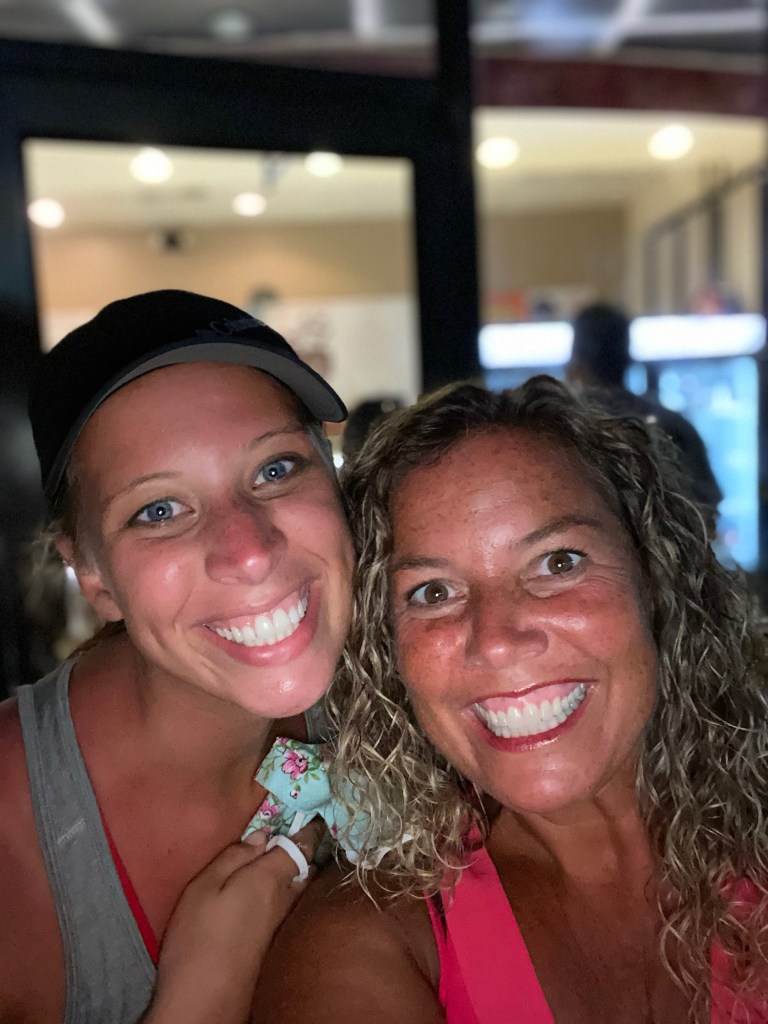
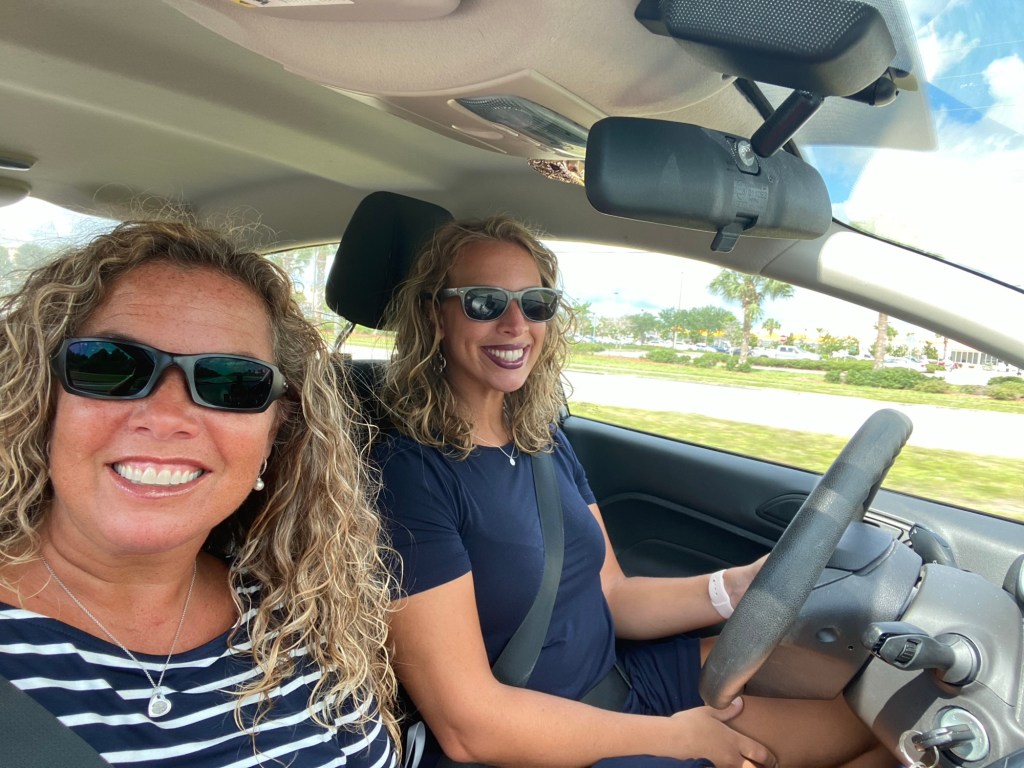
One day, I will run out of pictures of me and Mom. That thought haunts me every time I write one of these posts.

I feel bad for the kids who will grow up with ChatGBT, for they may never know the therapeutic art of writing.


“From the fruit of a person’s mouth his stomach is satisfied; he is filled with the product of his lips.  Death and life are in the power of the tongue, and those who love it will eat its fruit. ”‭‭

Proverbs‬ ‭18‬:‭20‬-‭21‬, CSB

I’ve thought a lot about words recently: which words lead to life and which lead to death. Words are incredibly powerful. With a mere sentence, one can build up and encourage or one can destroy hope.

One of the first few phrases I uttered after I found out about my Mom’s death was “I can’t do this. I can’t lose my Mom. Scott, I can’t lose my Mom. I can’t lose my Momma. Not my Momma,” I voiced in horror as the concept became a reality.

I’ve thought about that a lot: “I can’t do this,” but the truth is, I can. I don’t want to and I wish more than anything in the world that it wasn’t true, but I can do it. Then, I thought about how the phrases “I can’t do this” and “I can’t handle this,” are statements that lead to death. They’re dangerous – voicing and thinking them concedes defeat before endurance begins.

Thus, I am working to eliminate them from my vocabulary. I can handle this, I can do this, and you can, too.

Life and death are in the tongue, but the tongue only voices what the mind first conceptualized. We must retrain our minds to prepare for the trials we endure.

You and I — we can do this. We are going to make it. We can do this together, we must do this together. Isolation, avoidance, and silence destroy us. Together, we can share our burdens, we can support one another, and we can learn to love and to grow amidst what feels like a nightmare.

I wish my Momma would have chosen together. I wish she would have shared. If she were in her right mind, I believe she would have. We honor her when we share our burdens — it’s what she wanted for and from all of us.

She didn’t want this, not really. She spent the last few years of her life dedicated to preventing this type of reality. That was real. Her passion was real. Her detest for this type of pain was real, but, on that abhorrent day, she believed she couldn’t handle it, and she made that decision alone.

You can handle it. I can handle it. We can handle it together 💙. In her right mind, that is what she would have wanted.

Day 17

How exhausting. How sad.

I pretended to have a “day off” today. I didn’t answer messages, I didn’t accomplish any grief-related tasking, and I pretended to have a normal day off.

Dad and I went to the grocery store, I made toast and salad when I got home, I cleaned out the fridge, I did the dishes, I took a bath, I enjoyed the solitude. I enjoyed the silence.

Scott got home from work today and I met him at the door, like I always do when he comes home, and then it hit me. Calm tears warmed my eyes. My Mom always made such a big deal when my Dad came home from work. Mom and four of us kids would giddily line up at the door and we would scream “Daddy!” as he entered.

She always celebrated shrilly when Dad came home, and Dad did the same for her. They always did that — one would get home and the other would come to the door with so much joy and excitement.

I hate that my Dad won’t get that anymore. I hate that my Mom won’t be there to greet me excitedly when I go to their house. My family loved so deeply.

This entire situation is so difficult to comprehend, so terrible to realize, and so overwhelming to endure.

But we endure. Always, always enduring. Some moments it feels less like enduring and more like living, but those moments are scarce these days.

Day 16

Silence. Quiet. Peaceful, terrible.

Tomorrow will be the first day without any guests. All have gone home, and my father, my brother, and I will experience our first bouts of alone time. It’s necessary, it’s healing, and it will likely be painful.

Torrents of grief, sacred and terrible, assuage we mourners. I’ve loved and appreciated the depth and beauty of sadness, but I still hate enduring it at this level of intensity. Sorrow opens one’s eyes to a new world and demands a new perspective from the sufferer. This new perspective can make one bitter or it can make him or her more compassionate, but it either way the perspective shift prompts a response.

Grief is traumatic. It assaults the mind and the nervous system. It manifests itself in sadness and anxiety. It steals sleep from some and it keeps others in bed for days. It produces shaky hands and sore eyes. It creates fear and mistrust. It eliminates filters and threatens boundaries that otherwise would protect its victims.

We aren’t strong, we mourners, we are incredibly weak. We are at our most vulnerable and most sensitive. We are raw. We hurt, often more than we ever deemed imaginable or bearable. Yet, we bear it.

Some watch mourners with awe and amazement — unsure how we could function. Some are offended if a mourner is snappy or not as “bubbly” as normal. Some prefer to look away, noting how painful it is to even think about what a mourner endures.

Grief manifests differently in every individual because of the uniqueness of every single relationship; while that makes each person’s experience vastly personal, a wondrous communal aspect exists when we mourn the same individual.

It’s private, and it’s not. It’s personal, and it’s shared.

Mourning callously brings out both the best and the worst in people, because we join together in our grief but can quickly isolate from offenses and hurts. We are vulnerable, we are tired, and we are boundlessly sad.

When we love each other and show up for one another and extend continuous grace — that is when we mourn well.

We mourn because we lost someone so incredibly precious, and we cannot stop loving them. Love transcends time, space, and even death. Love well.

Above all, love each other deeply for love covers a multitude of sins

I Peter 4:8

Day 14

Two weeks.

There’s a weight so heavy on my chest I feel like I can barely breathe. It feels like I am operating at 50% of my normal capacity, if that. It feels so heavy. What does that even mean? Why does it legitimately feel like there is a weight pressed against my lungs, collapsing them? How does that work? How does the body do that?

I thought we had something special, me and my mom. I thought we had a great relationship. Now I feel like I didn’t even know her. Who was this woman I spent so much time with? I thought she liked being with me, I thought she wanted to be in my life, I thought she wanted to be here. But in the end, she wanted to leave me. It wasn’t worth it for her to stay in my life. She didn’t want to see me grow up anymore. I thought we were going to be two old ladies together. I thought she wanted me. I thought she wanted me. Did she think I did not love her? Why weren’t we enough?

I hate my name. I’ve hated it for a long time. My mom gave me this name because she hoped so badly for me… what good did that do for her? It’s so cruel to be named Hope when it feels like so many people in my world are hopeless.

“Hopey, you’re my Hope. You make me believe that everything’s going to be okay and that we’re really going to make it.” That’s what my brother Patrick told me two days before he ended his life. Once he died, I really started to hate my name.

Before that, I was always a pessimist. It felt so ironic to be called “hope” when I so seldom experienced hope myself.

Now this? I hate my name. It feels so cruel tonight.

Why did I start writing these? I keep asking myself that. More precisely, why did I start publishing these? I’ve loved writing for my entire life. I used to write fantastical stories, dreaming worlds late into the night when I was just a young girl. Then in puberty I started writing to cope with my ever-changing world. Now, I almost exclusively write when my emotions cloud my head, spill out of my eyes, and pours from an ink pen onto a blank page.

So, why did I start publishing these?

After Patrick died, I seriously isolated myself. I did not answer my phone for over a month and I had no desire to make contact with the outside world.

In our American culture, grief is so private. Suicide is beyond taboo, and people in mourning may be given three days of bereavement leave. Three days… how pathetic. Our culture almost treats grief like something to be ashamed of or to be quickly gotten over. Because of this, death and grief are seldom discussed and very few — especially at my ripe old age of 27 — people have much of a framework/understanding of mourning and grief.

Grief shouldn’t isolate. It should be something that pulls us all together, something that makes us stop and hold one another closer, something that prompts us to change our lives for the better.

As my friend Olivia Chancellor always says “Alone is a lie.” Maybe if I share my thoughts, others will have the courage to share theirs too. Thoughts can be scary and painful and feel so isolating, but alone is a lie. “Everything that is exposed by the light becomes visible–and everything that is illuminated becomes light,” Ephesians 5:13. It’s only when we share our darkest thoughts that we are truly able to heal from them.

I want to live. I want to have a life full of beauty and joy and pain and wonder. I want to experience it all. I want to be fully present. I want to experience life to the full in every possible way, no matter how it hurts.

I don’t want to move on from this. I will be carrying this for the rest of my life, and I want to grow and learn to carry this with grace and love and even hope. I want to live, and I want to live well.

Day 13

I screamed a lot in my car today. Just… screamed. “Mom!! Why did you do this?” Through sobs, “Mom, please come back, please come back!”… “Mom!!” I cried out in anguish.

But it’s useless, she’s gone.

My mind really does not want to believe it. I meet her in dreams, only to wake and feel her light snuffed out of the world. She was sitting on our living room couch in last night’s dream, and I was asking her why she wouldn’t join us at the table. I don’t remember what she answered, I just remember telling her that it did not make sense and that she should join the rest of us at the table because we love her and want to be with her.

Denial’s amazing protectiveness still shields me, for the most part, but everything feels so heavy. I feel the horror and the sadness deeply about once a day: I’ll cry, I’ll protest. I really wish this was not a part of my life. I wish this was not the end of hers. I wish it so badly that denial and numbness creep back in and calmness returns.

I feel like an outside observer to my own feelings and my own thought process. I feel them, objectively define them, and then move on.

Each day, the sadness grows and strengthens. I feel the denial slowly slipping away, and I fear when my mind allows me to fully grasp the situation. How much is this really going to hurt when my mind finally lets me feel it? It already hurts so much, but the pain will become vivid soon, and it will never, ever end.

I have so much life left to live. It feels like my life has only begun, and I will feel this sorrow for all of my days.

I’m not angry with God, though I would like to be. Anger is such an easy emotion to experience — anger is easy to fuel and easy to calm — it’s not as ambiguous as sorrow. It feels like it would be easy to be angry at God, but my every need has been met. People have been so generous and caring and kind — I can’t be angry when I perceive such marvels from God amidst all this pain.

I am confused: I will never understand why God allowed this nor why God did not intervene, but perhaps God had intervened several times. I will never know how many times my mother was close ending her life but chose not to because someone intervened. I just wish she would have told us, as I am sure we all do.

She had so many people who loved her deeply, and she could have reached out to any of us. That is a collective hurt those closest to her bear and must work through for the rest of our lives, and many of us have so much life yet to be lived.

Daily Tip for Communicating with Someone in Mourning

Presence is best 🤍. Be here, share here, create space here.

Love each other well.

We used to love sharing a Chili’s molten lava cake

Day 7

I’ve never appreciated the term “Celebration of Life,” but that’s exactly what we experienced today.

The sacred beauty of funerals presents itself in the friends who show up, the people who tune in, and the unique set of individuals determined to listen and observe the stories of a life once lived.

Today you found out how my mom died: you learned the news we wish we did not need to share. I hate that this is part of Mom’s story, and I hate that it is part of mine.

When I think back over the years, maybe every day we had with my mom since Patrick died was a miracle — maybe it was a miracle before even that. We’ll never know, and that’s severely painful.

I thought this past year was the best year of my life. I thought we were all having so much fun. It’s abysmally burdensome to reconcile, but I do know that multitudes of feelings may commingle — joy with sorrow, anger with relief, frustration with love.

As was said many times today, “May we never be defined by our worst moments.” My Momma was so beautiful, and she loved life, and she endured an unimaginable despair. Both were entirely true.

Thank you for my Momma’s beautiful Celebration of Life. She would have loved it 🩷

Daily Tip for Communicating with Someone in Mourning — Specifically for Suicide Survivors

  1. If a cause of death is not published immediately, it is likely because it is due to a highly sensitive cause of death – such as suicide – It is rude to ask the family “What happened?” prior to the family’s announcement. Curiosity is natural, but respect the family when a cause of death is not mentioned.
  2. Do not ask someone how their loved one took their life. This is also quite rude and this information rarely helps.
  3. Do not ask if “foul play” was involved. Suicide is one of the harshest ways someone can die — a survivor of suicide wishes more than anything else that their loved one did not take their life.
  4. Do not ask if their loved one left a note.

Everyone wants to make sense of a horrible situation, but most questions of this nature are extremely insensitive to suicide survivors.

Future Ways to Help

Listen. Create a safe space for the wounded. A survivor may want to share details such as how their loved one died, this is a privilege and not a right. This sacred information should be honored with respect and reverence.

Reminder for the GoFund Me set up for my Daddy. Our family has an immense amount of trauma to rehabilitate from.

Thank you for loving my Momma 💙

Day 11

When my eyes open in the morning, a fresh onset of “this is life now” sets in and burrows sorrow deeper and deeper into my soul. Heaviness surrounds me in the black room and my tired eyes do not search for light, they simply stare at the ceiling, wishing my Mom was still here. Deep breath. The pain accompanies me every moment, but the dark quiet incubates it. Here, it’s raw and vulnerable and sad.

I’ve never been very good about jumping out of the bed and getting ready for the day, but now getting out of bed requires much more effort than simply awakening from a sleepy stupor.

We went to the zoo today, which I suppose is good, but I have very little interest in doing much right now. Exhaustion has set in – at first I was not sleeping, now I am sleeping at night and napping during the day. No matter what time or where I sleep, persistent dreams come alive. I am so out of sorts.

Daily Tip for Communicating with a Person in Mourning

I love your daily messages. Some via text, some via instant messenger, some commenting on these posts. I have not responded much to them, but I do appreciate them. Facebook comments are the easiest [quickest, really] to read right now, but I like the instant messages / texts too. I am just a little slower at opening those. Your messages help. I like reading about your experience and it feels validating and comforting to see your support, prayers, and encouragement.

Day 10

Day by day, more people leave, and tomorrow our last visitors will travel home. My nuclear family, all that remains, will experience one week together before some return home to North Carolina.

Then the “new normal” will really start to settle as we grasp for new routines.

My mind strives to protect me by covering me mainly in denial. Most of the time, reality feels miles away. I dream constantly of my Mother: dreams telling her why she shouldn’t leave, dreams of me finding her in witness protection, dreams that continue to deny reality. A properly-working mind knows when one has the capacity to wake up to reality, but for now my mind operates mainly from shock and denial.

I am anxious for when my mind will allow me to feel everything it must, for “pain demands to be felt,” and thus it’s only a matter of time.

Today, I am simply grateful again for everyone’s phenomenal support.

Daily Tip for Communicating with Someone in Mourning

The less decisions a person in mourning needs to make, the better. Mourning requires an enormous amount of mental energy, and helping make a decision alleviates a bit of mental fatigue.

Day 9

Our second church service since Mom left us filled me with encouragement once more. A healthy amount of tears dripped from my sore eyes onto my pallid cheeks as we sang of God’s good plans, his faithfulness, and his constance. All of which I believe, and I mean really believe.

However, I mentioned the dissonance between faith and desperate circumstances during Mom’s Celebration of Life, and I want to share more of what exactly that looks like. Suffering forces people to confront their inmost beliefs, and that is completely healthy and can become beautiful. My Mom loved Jesus with her entire being: the cacophony of confusion left in her wake prompts intense introspection and deconstruction.

Our Father in heaven,

your name be honored as holy.

Your kingdom come,

Your will be done

on earth as it is in heaven.

Give us this day our daily bread.

And forgive us our debts,

as we also have forgiven our debtors.

And do not bring us into temptation,

but deliver us from the evil one.

Matthew 6:9-13, CSB

Now, please understand, I’m not looking for answers and I do not plan to provide any at this time, but I do want to share the questions clamoring in my mind. Thoughts that, perhaps, cloud your mind as well. Maybe sharing my thoughts will help those echoing the same to feel less alone and less afraid, because two thoughts can be true at the same time: one can trust God and be utterly confused and skeptical at the same time. Thus, my questions:

Good fathers are supposed to protect their family. Why don’t you [God] protect mine?

If Jesus is the abundant life, how could my mom die? She loved him.

If he [God] knew what Mom needed, why weren’t her needs met?

I’ve said this so many times — I believe that God can do all things, but I fear what he will allow to happen. This is precisely why: I have not experienced twice how despair and hopelessness kill those whom I love, and those who legitimately love Jesus.

Today, I was incredibly overwhelmed by the generosity and the care from mine and Scott’s small group. They ensured our current needs were met and provided provisions for our future needs. My family has experienced such incredible and support from people being the hands and feet of Jesus, and, because of them, right now my faith remains strong. I wrestle through these complex questions, but it is abundantly clear that we have our daily bread, that God is providing and caring for us, and that we will get through this. I cannot thank our community enough for all they have done. You have eclipsed this horribly dark and tragic time with light and love and I am amazed and humbled at all of this. Thank you.

Tips for Communicating with Someone in Mourning

Acknowledging the situation is better than avoiding the topic altogether. It may be awkward to speak up, but a simple “I see you,” goes a long way 💙

Day 8

Funeral preparations cease but a few friends and family members from out of town remain close. Reality slowly creeps in as the whispers of finding a “new normal” lingers just around the corner. In a matter of days, most of the world will return to work while we begin to reorganize our lives.

My Daddy, of course, will have the most significant adjustment for his day-to-day life. Already, he sleeps without my Mom, but he has not had to experience a “typical” day without her. They were partners, they were friends, and they were lovers. I always thought they really would be that couple from The Notebook: I never thought this could happen.

Their relationship was an anchor in my life. They endured and overcame agonizing trauma together again and again and again, and they were the best of friends. Growing up, I always wanted a marriage like theirs. Since getting married, I still wanted a relationship like theirs! My marvelous husband and I watched their love for one another with reverence and admiration. They were such an amazing team. They loved being together and they loved each other well. It’s difficult not to be really angry with my mom when I think of their truly inspirational marriage… and then it’s really, really, really sad.

As my brother Luke reminded, my siblings and I had never known a world without Mom until eight days ago.

Rehabilitation — that’s the word that keeps bustling through my mind. Learning to live without Mom feels like rehabilitating back into normal society: walking, driving, talking, biking, writing, smiling, and so much more, feels so foreign and unnatural. I feel as though I can barely hold a thought or concept in my mind.

Denial persists more than anything right now, a dull ache thumps within me at all times, but most of the time I can’t believe my Mom’s gone and I can’t believe my mom left me feels like a distant thought and not an annihilating reality. My Momma, I still mumble in shock. Moments of mayhem pierce me to the core, preparing me for when the shock wears off and when I’ll have to truly face this menacing reality.

My Mom grounded and anchored my life, creating stability and safety. What now?

Daily Tip for Communicating with Someone in Mourning

I have provided many things not to say — all of which from comments multiple people have made, not just one-off comments as to not single anyone out — but there are so many good things people say as well.

“I’m sorry” feels like such a weak thing to say, but it encompasses a tremendous amount of emotion and care. The short phrase empathizes with the mourners and often creates an understanding between two hurting people.

Future Ways to Help

Small tasks are incredibly helpful — doing a load of laundry, wiping down a counter, calling to set up a dental appointment. Sometimes it’s hard for me to even remember to put a pair of shoes on – it’s invaluable to notice those little things that may be neglected and to help one another out.

We’re a grieving community, and we’ve got this 💙