Adrenalin has faded. Shock and denial slowly sift away, and reality rises like the sun in my tired mind. Tears fall more readily, memories pour out more steadily, and I remain dazed.
Grief shrouds everything, creating fog in every way. I don’t realize how dense the brain fog is until I attempt to have a conversation — it’s like I can barely remember to finish a sentence.
Any chores accomplished are simply done by an automatic response from years of habit. If I take a sweater off or a pair of sunglasses, I place them down and I will completely forget about them, leaving tattered articles throughout the house.
We were quite social today, which is both nice and weird. It’s like re-acclimating into society: it reminds me of being at a restaurant in a foreign country where I don’t know the language or the customs. We’re all still eating, which is pretty universal, but everything else feels so different.
I’m so tired. So, so, tired.
Everything is sad — it’s the opposite of rose-colored glasses. It’s like seeing everything in deep shades of blue and gray, muting colors from the world.
We don’t have to be afraid of our emotions, we don’t have to be afraid of experiencing deep sadness and despair, but we should be afraid of not sharing those emotions. We should be afraid of bottling up our feelings, we should be afraid to pretend everything is okay, we should be afraid of running/hiding/escaping from our pain.
Pain demands to be felt. When we ignore it or when we hide it from the world, we destroy ourselves. It’s not fun to be sad, it doesn’t feel good, but it is vital to our health and to the health of our community.
Isolation demands secrets and keeps one quiet. Feeling one’s pain will not ruin oneself, but unshared thoughts and feelings can consume their host.
True community, sincere authenticity, and genuine friendship begin when honesty permeates every interaction. The pain that we conceal cannot stay hidden. We cannot protect our hearts from feeling deep heartbreak, but we can grow and heal from that hurt. Sharing our pain creates a system of rivers and waterways that lead to an ocean of safety — it protects from flooding and destruction that unchecked thoughts create.
Yes, enjoy privacy, yes, be discreet, yes, be careful with whom you share your inmost thoughts, but make no mistake: you must share. Be honest with yourself about your thoughts and feelings, and be open with your friends.
The only way we overcome darkness is with light — the light of honesty and truth.
Grief spotlights time’s relativity. It’s been three weeks since…
It feels like three years, or sometimes three days. The days are all different but the heartache remains the same. Feelings. They’re just that — feelings. They’re aren’t good feelings, and there aren’t bad feelings. They are just feelings, each one with important messages and memories.
Sadness, I think, we feel most acutely. We feel grief, sadness, and trauma with all of the senses: it leaks from our eyes, it steals our taste, it stuffs our smell, it quickens our heartbeats, it deafens our ears. It makes us painfully aware of our thoughts and processes and it highlights both past memories and future dreams. We’re somehow the most vivid versions of ourselves in deep suffering, because it fractures our capacity to be anything else.
We’re raw, exposed, and in need of help, love, and compassion. We need all these while happy, but we feel the need for them most in sorrow. Our walls crumble in hardship because our defenses are broken — we no longer have the energy to organize thoughts and feelings and responses in a tidy manner.
Perhaps we are most ourselves when we allow sorrow to guide us. When we do, we are sensitive both to the more painful emotions but likewise sensitive to gratitude and awe. In the years to come, I will remember this deep and sacred pain, but I will remember your kindness too. I will remember the friends and family who joined me in my grief, who sat with me while I mumbled, who kept checking in, who brought me food, who gave generously without expectation. I will remember all the good as much as I remember the horror, because, at this time, I am most sensitive and most receptive to it all.
That is the beauty of sorrow and heartbreak. That is the beauty of love. This heightened sensitivity opens the core of who we are and allows others to love the deepest part of ourselves.
The pain, the hurt, the terror at losing my Mom… I can’t begin to describe it, and yet I write each night about it. Still, words fail to communicate the depth of heartache. It feels as though an entire ocean could not contain the void she left behind.
We talked about how Jesus was prophesied as the Man of Sorrows (Isaiah 53:3). It’s interesting how our only descriptions of what Jesus’ personality was like details his acquaintance with grief and his need for solitude.
Sorrow grows compassion and empathy, if we allow the seeds of sorrow to sprout with life. Sorrow, likewise, can break and embitter its host. Our lack of agrarian culture prohibits most of us from truly appreciating the many harvest metaphors in the Bible — our instant world wants instant solutions, instant healing, instant joy — but growth and healing and most good things happen in tiny little sprouts and in growing buds.
I’ve never been afraid of sorrow. Sorrow took up residency in my heart long ago and gave me a deep melancholy disposition since I was young. I’ve appreciated Sorrow, I’ve been most comfortable in its shadows, but my mind has hidden me from this grief. It is like I cannot accept the loss of my mother. My mind works tirelessly to keep me from feeling the magnitude of the loss the majority of the day, but when it does hit, it’s like torrents of rain and a tsunami coming to overtake me.
I’ve never felt more afraid to be sad. I’ve never been afraid of sorrow — sorrow has been my companion for so long. But I am afraid. I am afraid of how much it hurts, I am afraid of life without my mom. I am afraid about how much I will miss her forever. I didn’t think I’d have this many decades ahead of me without my mom.
It’s so strange to me to be afraid of this sadness, when I have always honored and cared for sorrow. My mind won’t let me believe it’s real, that Mom’s really gone. It’s protecting me from indulging in the sadness of it all. It’s strange and surreal.
I miss my Mom. I loved my Mom. I wish this wasn’t real.
I’m not really sure what to type today, but I set out to write and publish 30 days of thoughts to give people a glimpse into the world of a survivor.
“Suicide,” “murder,” “survivor” — these are all words I never thought would be so incredibly personal and defining in my life. I remember the first time I really learned in-depth about suicide the was in an eighth or ninth grade English class, studying Thirteen Reasons Why. I didn’t care much for the book then… I detest it even more now. I had no idea, back then, that suicide would claim as least a third of my family.
It’s so dark, so horrific. I observe that most shy away from the topic. Families have been shamed, judgement often cast at survivors. Survivors — what a heavy title. Institutions often choose not to address it corporately. I assume so few understand the depth of the concept, and people often flounder when they are unfamiliar with something so dark, so scary, and so sensitive.
The band Twenty One Pilots engages in the conversation. Their song “Neon Gravestones,” discusses how culture has glorified suicide, stating it’s “further engraving an earlier grave is an optional way.” Contrasting the idealized perspective, the band ends the song with the following lyrics:
Find your grandparents or someone of age Pay some respects for the path that they paved To life they were dedicated Now, that should be celebrated!
The beginning of the song highlights a dangerous mindset:
“Keep your wits about you while you got ’em ‘Cause your wits are first to go while you’re problem-solving”
This is a dark post, but I do want to bring awareness to this epidemic.
For those who are struggling, ending your life does not solve the problem. Your pain and your hurt are real. It may feel absolutely impossible, but you can heal. Your life can be redeemed. This pain, it will be redeemed.
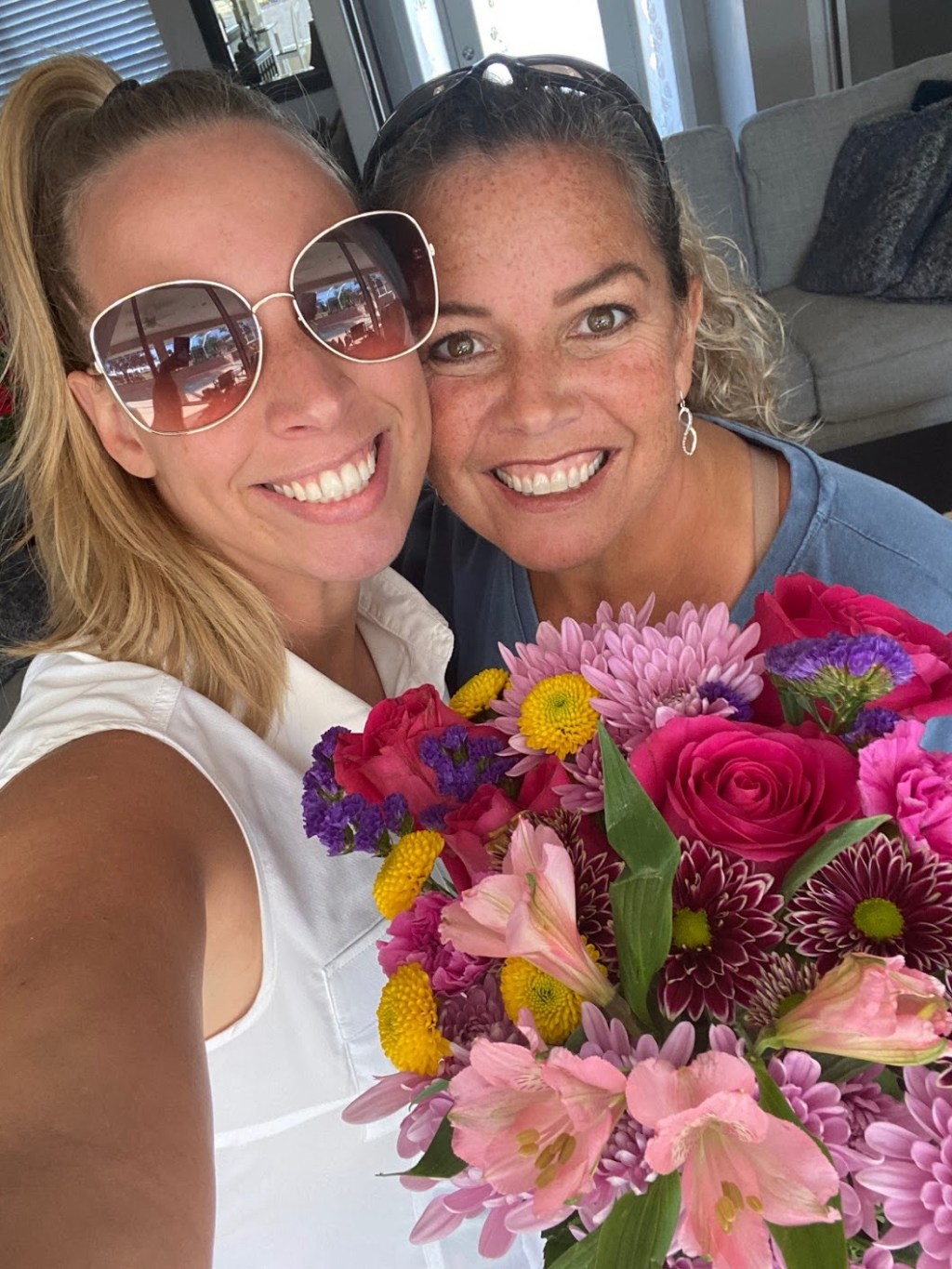
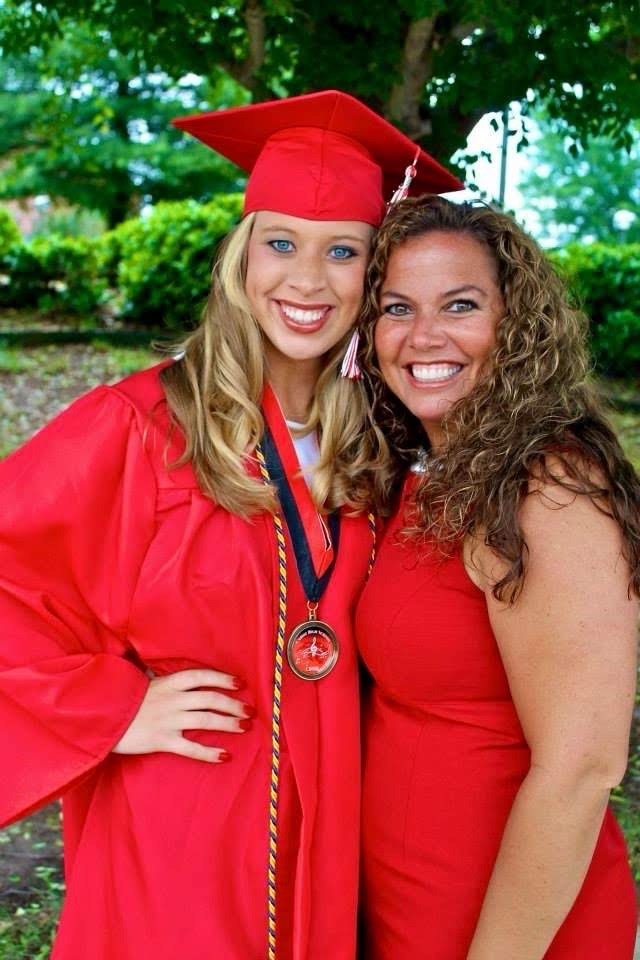
One day, I will run out of pictures of me and Mom. That thought haunts me every time I write one of these posts.
I feel bad for the kids who will grow up with ChatGBT, for they may never know the therapeutic art of writing.
“From the fruit of a person’s mouth his stomach is satisfied; he is filled with the product of his lips. Death and life are in the power of the tongue, and those who love it will eat its fruit. ”
Proverbs 18:20-21, CSB
I’ve thought a lot about words recently: which words lead to life and which lead to death. Words are incredibly powerful. With a mere sentence, one can build up and encourage or one can destroy hope.
One of the first few phrases I uttered after I found out about my Mom’s death was “I can’t do this. I can’t lose my Mom. Scott, I can’t lose my Mom. I can’t lose my Momma. Not my Momma,” I voiced in horror as the concept became a reality.
I’ve thought about that a lot: “I can’t do this,” but the truth is, I can. I don’t want to and I wish more than anything in the world that it wasn’t true, but I can do it. Then, I thought about how the phrases “I can’t do this” and “I can’t handle this,” are statements that lead to death. They’re dangerous – voicing and thinking them concedes defeat before endurance begins.
Thus, I am working to eliminate them from my vocabulary. I can handle this, I can do this, and you can, too.
Life and death are in the tongue, but the tongue only voices what the mind first conceptualized. We must retrain our minds to prepare for the trials we endure.
You and I — we can do this. We are going to make it. We can do this together, we must do this together. Isolation, avoidance, and silence destroy us. Together, we can share our burdens, we can support one another, and we can learn to love and to grow amidst what feels like a nightmare.
I wish my Momma would have chosen together. I wish she would have shared. If she were in her right mind, I believe she would have. We honor her when we share our burdens — it’s what she wanted for and from all of us.
She didn’t want this, not really. She spent the last few years of her life dedicated to preventing this type of reality. That was real. Her passion was real. Her detest for this type of pain was real, but, on that abhorrent day, she believed she couldn’t handle it, and she made that decision alone.
You can handle it. I can handle it. We can handle it together 💙. In her right mind, that is what she would have wanted.
I pretended to have a “day off” today. I didn’t answer messages, I didn’t accomplish any grief-related tasking, and I pretended to have a normal day off.
Dad and I went to the grocery store, I made toast and salad when I got home, I cleaned out the fridge, I did the dishes, I took a bath, I enjoyed the solitude. I enjoyed the silence.
Scott got home from work today and I met him at the door, like I always do when he comes home, and then it hit me. Calm tears warmed my eyes. My Mom always made such a big deal when my Dad came home from work. Mom and four of us kids would giddily line up at the door and we would scream “Daddy!” as he entered.
She always celebrated shrilly when Dad came home, and Dad did the same for her. They always did that — one would get home and the other would come to the door with so much joy and excitement.
I hate that my Dad won’t get that anymore. I hate that my Mom won’t be there to greet me excitedly when I go to their house. My family loved so deeply.
This entire situation is so difficult to comprehend, so terrible to realize, and so overwhelming to endure.
But we endure. Always, always enduring. Some moments it feels less like enduring and more like living, but those moments are scarce these days.
Tomorrow will be the first day without any guests. All have gone home, and my father, my brother, and I will experience our first bouts of alone time. It’s necessary, it’s healing, and it will likely be painful.
Torrents of grief, sacred and terrible, assuage we mourners. I’ve loved and appreciated the depth and beauty of sadness, but I still hate enduring it at this level of intensity. Sorrow opens one’s eyes to a new world and demands a new perspective from the sufferer. This new perspective can make one bitter or it can make him or her more compassionate, but it either way the perspective shift prompts a response.
Grief is traumatic. It assaults the mind and the nervous system. It manifests itself in sadness and anxiety. It steals sleep from some and it keeps others in bed for days. It produces shaky hands and sore eyes. It creates fear and mistrust. It eliminates filters and threatens boundaries that otherwise would protect its victims.
We aren’t strong, we mourners, we are incredibly weak. We are at our most vulnerable and most sensitive. We are raw. We hurt, often more than we ever deemed imaginable or bearable. Yet, we bear it.
Some watch mourners with awe and amazement — unsure how we could function. Some are offended if a mourner is snappy or not as “bubbly” as normal. Some prefer to look away, noting how painful it is to even think about what a mourner endures.
Grief manifests differently in every individual because of the uniqueness of every single relationship; while that makes each person’s experience vastly personal, a wondrous communal aspect exists when we mourn the same individual.
It’s private, and it’s not. It’s personal, and it’s shared.
Mourning callously brings out both the best and the worst in people, because we join together in our grief but can quickly isolate from offenses and hurts. We are vulnerable, we are tired, and we are boundlessly sad.
When we love each other and show up for one another and extend continuous grace — that is when we mourn well.
We mourn because we lost someone so incredibly precious, and we cannot stop loving them. Love transcends time, space, and even death. Love well.
Above all, love each other deeply for love covers a multitude of sins
There’s a weight so heavy on my chest I feel like I can barely breathe. It feels like I am operating at 50% of my normal capacity, if that. It feels so heavy. What does that even mean? Why does it legitimately feel like there is a weight pressed against my lungs, collapsing them? How does that work? How does the body do that?
I thought we had something special, me and my mom. I thought we had a great relationship. Now I feel like I didn’t even know her. Who was this woman I spent so much time with? I thought she liked being with me, I thought she wanted to be in my life, I thought she wanted to be here. But in the end, she wanted to leave me. It wasn’t worth it for her to stay in my life. She didn’t want to see me grow up anymore. I thought we were going to be two old ladies together. I thought she wanted me. I thought she wanted me. Did she think I did not love her? Why weren’t we enough?
I hate my name. I’ve hated it for a long time. My mom gave me this name because she hoped so badly for me… what good did that do for her? It’s so cruel to be named Hope when it feels like so many people in my world are hopeless.
“Hopey, you’re my Hope. You make me believe that everything’s going to be okay and that we’re really going to make it.” That’s what my brother Patrick told me two days before he ended his life. Once he died, I really started to hate my name.
Before that, I was always a pessimist. It felt so ironic to be called “hope” when I so seldom experienced hope myself.
Now this? I hate my name. It feels so cruel tonight.
Why did I start writing these? I keep asking myself that. More precisely, why did I start publishing these? I’ve loved writing for my entire life. I used to write fantastical stories, dreaming worlds late into the night when I was just a young girl. Then in puberty I started writing to cope with my ever-changing world. Now, I almost exclusively write when my emotions cloud my head, spill out of my eyes, and pours from an ink pen onto a blank page.
So, why did I start publishing these?
After Patrick died, I seriously isolated myself. I did not answer my phone for over a month and I had no desire to make contact with the outside world.
In our American culture, grief is so private. Suicide is beyond taboo, and people in mourning may be given three days of bereavement leave. Three days… how pathetic. Our culture almost treats grief like something to be ashamed of or to be quickly gotten over. Because of this, death and grief are seldom discussed and very few — especially at my ripe old age of 27 — people have much of a framework/understanding of mourning and grief.
Grief shouldn’t isolate. It should be something that pulls us all together, something that makes us stop and hold one another closer, something that prompts us to change our lives for the better.
As my friend Olivia Chancellor always says “Alone is a lie.” Maybe if I share my thoughts, others will have the courage to share theirs too. Thoughts can be scary and painful and feel so isolating, but alone is a lie. “Everything that is exposed by the light becomes visible–and everything that is illuminated becomes light,” Ephesians 5:13. It’s only when we share our darkest thoughts that we are truly able to heal from them.
I want to live. I want to have a life full of beauty and joy and pain and wonder. I want to experience it all. I want to be fully present. I want to experience life to the full in every possible way, no matter how it hurts.
I don’t want to move on from this. I will be carrying this for the rest of my life, and I want to grow and learn to carry this with grace and love and even hope. I want to live, and I want to live well.
I screamed a lot in my car today. Just… screamed. “Mom!! Why did you do this?” Through sobs, “Mom, please come back, please come back!”… “Mom!!” I cried out in anguish.
But it’s useless, she’s gone.
My mind really does not want to believe it. I meet her in dreams, only to wake and feel her light snuffed out of the world. She was sitting on our living room couch in last night’s dream, and I was asking her why she wouldn’t join us at the table. I don’t remember what she answered, I just remember telling her that it did not make sense and that she should join the rest of us at the table because we love her and want to be with her.
Denial’s amazing protectiveness still shields me, for the most part, but everything feels so heavy. I feel the horror and the sadness deeply about once a day: I’ll cry, I’ll protest. I really wish this was not a part of my life. I wish this was not the end of hers. I wish it so badly that denial and numbness creep back in and calmness returns.
I feel like an outside observer to my own feelings and my own thought process. I feel them, objectively define them, and then move on.
Each day, the sadness grows and strengthens. I feel the denial slowly slipping away, and I fear when my mind allows me to fully grasp the situation. How much is this really going to hurt when my mind finally lets me feel it? It already hurts so much, but the pain will become vivid soon, and it will never, ever end.
I have so much life left to live. It feels like my life has only begun, and I will feel this sorrow for all of my days.
I’m not angry with God, though I would like to be. Anger is such an easy emotion to experience — anger is easy to fuel and easy to calm — it’s not as ambiguous as sorrow. It feels like it would be easy to be angry at God, but my every need has been met. People have been so generous and caring and kind — I can’t be angry when I perceive such marvels from God amidst all this pain.
I am confused: I will never understand why God allowed this nor why God did not intervene, but perhaps God had intervened several times. I will never know how many times my mother was close ending her life but chose not to because someone intervened. I just wish she would have told us, as I am sure we all do.
She had so many people who loved her deeply, and she could have reached out to any of us. That is a collective hurt those closest to her bear and must work through for the rest of our lives, and many of us have so much life yet to be lived.
Daily Tip for Communicating with Someone in Mourning
Presence is best 🤍. Be here, share here, create space here.
Love each other well.
We used to love sharing a Chili’s molten lava cake